
By Bongubukhosi Chantelle Ncube |
Zim GBC News
BULAWAYO – For decades, access to healthcare in Zimbabwe’s townships and high-density suburbs has been measured not in minutes, but in kilometers.
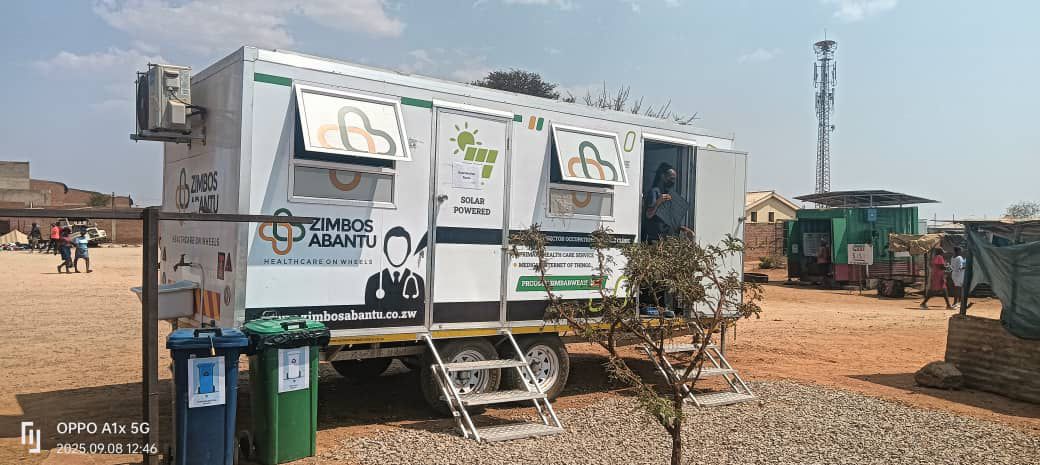
This is a reality that the organisation ZimbosAbantu Healthcare on Wheels, supported by the National AIDS Council and local partners, is working to transform.
Their fully equipped, caravan-like mobile clinics are not just bringing healthcare closer; they are fundamentally shrinking the distance to care itself.
Founder and CEO of ZimbosAbantu, Tawanda Mushawedu, highlighted the critical need for this intervention.
“When sickness enters a home, it is often mothers and children who bear the burden,” he said.
“They are often seen walking long distances to find the nearest clinic which are sometimes more than 5km away.”
Two Clinics, Two Communities
Currently, ZimbosAbantu operates in two key Bulawayo locations: Cowdray Park and Mganwini. The spaces were allocated in partnership with the Bulawayo City Council.
These fast-growing neighborhoods, previously constrained by limited social infrastructure, are now witnessing a new model of healthcare delivery that is locally rooted and community-driven.
The initiative has also had an economic impact. Each mobile clinic is equipped with an in-house nurse and a rotating doctor. Most importantly, the project has provided employment to 29 people across both sites, thereby contributing to the local fight against unemployment.
Impressive Numbers Build Trust
The community’s appreciation for the service is reflected in its usage. During the recent Mzilikazi Day celebrations, the ZimbosAbantu team attended to over 169 people in a single day. For a mobile facility, these numbers reflect both a pent-up demand and a quickly growing trust from the community.
They also speak to how quickly word spreads when healthcare comes directly to the people.
Why “Shrinking the Distance” Matters
The impact goes beyond convenience. When access is limited, delays in care often mean diseases progress, children miss school, and mothers carry both the emotional and physical weight of seeking help. By reducing the travel gap, mobile clinics address multiple layers of inequality at once:
· Time saved: Families no longer sacrifice hours walking to distant clinics.
· Cost reduced: Transport expenses, often as much as US$4 per trip, are eliminated.
· Access increased: Healthcare reaches the most vulnerable who would otherwise be left behind.
A Broader Vision for Health
ZimbosAbantu’s mission extends beyond immediate treatment. Their approach is tied directly to Sustainable Development Goal 3: Good Health and Well-Being, with a clear commitment to “leave no one behind.”
In practice, this means integrating essential health care services with education and prevention strategies designed to empower communities to sustain their own health long-term.
Follow Zim GBC News on Social Media:
·X (Twitter): @ZimGbc ·Instagram: @ZimGBCNews
·TikTok: @ZimGBCNews_01 ·Facebook: Zim GBC News
·YouTube: Zim GBC News
Get real-time alerts on WhatsApp:
+263 773 820 323
For in-depth coverage, visit our website: www.zimgbcnews.co.zw
*Zim GBC News | Global News From An African Perspective *©️2025