

Zim GBC News | Business Reporter
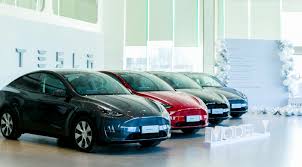
BEIJING – In a strategic masterstroke of economic policy, Chinese officials successfully leveraged Tesla and its CEO, Elon Musk, as a catalyst to transform its domestic electric vehicle (EV) industry from a subsidized backwater into a global powerhouse, new analysis reveals. The tactic, known as the “catfish effect,” has resulted in Chinese automakers like BYD now outselling Tesla in the pure electric vehicle market.
The “catfish effect” is a business metaphor where a predator is introduced into a placid environment to spur the native population into a fitter, more competitive state. In 2018, China applied this theory by granting Tesla an unprecedented deal: the ability to build a wholly foreign-owned factory in Shanghai, free from the joint-venture requirements imposed on all other automakers for decades.
“The Chinese government provided Tesla with favourable terms, including land and financing, but the unstated goal was always to create a domestic champion,” said Dr. Anya Sharma, a global trade analyst.
“Tesla was the high-standard competitor brought in to force the entire domestic supply chain to evolve at lightning speed.”
The strategy worked precisely as planned. Before Tesla’s Gigafactory Shanghai, China’s EV sector was fragmented, reliant on heavy subsidies, and produced largely mediocre vehicles. Tesla’s arrival created an immediate demand for high-quality local components—batteries, sensors, and chips—that previously did not exist at scale in China.
“Once Chinese firms learned to manufacture to Tesla’s rigorous standards, they could supply anyone,” explained a Beijing-based industry insider who spoke on condition of anonymity.
“Overnight, companies like BYD, NIO, and XPeng had access to a world-class supply chain. They absorbed Tesla’s production methods, matched its innovation, and then began beating it on price.”
The data now confirms the strategy’s success. As of the third quarter of 2025, BYD has sold 1.606 million pure electric vehicles (BEVs), compared to Tesla’s 1.218 million—a lead of nearly 400,000 units, meaning BYD is selling approximately 32% more BEVs than Tesla this year.
A Contrast in Approaches: China’s Welcome vs. US Protectionism
The Chinese strategy stands in stark contrast to recent moves by the United States. Just days after the grand opening of a new “American” solar manufacturing plant owned by Chinese giant Trina Solar, US lawmakers threatened legislation to cut subsidies for solar companies with Chinese ties.
This forced Trina Solar to immediately sell the facility to a Western buyer. The factory, its workers, and its technology remained the same; only the ownership on paper changed.
“America is throwing the catfish out of the tank and congratulating itself for it,” Dr. Sharma noted.
“China invited the catfish in, used it to train its sardines, and now its sardines are thriving globally. The US, in its bid to claim a domestic victory, is left with a hollowed-out factory and a reliance on imported technology.”
Analysts conclude that while China used competition to build enduring industrial capacity, the US approach of blocking foreign investment may ultimately stifle innovation and slow its own green energy transition.
Follow us on social media for more breaking news and in-depth analysis:
· X (Twitter): @ZimGbc
·Instagram: @ZimGBCNews
·TikTok: @ZimGBCNews_01
·Facebook: Zim GBC News
·YouTube: Zim GBC News
Get real-time alerts on WhatsApp:
+263 773 820 323
For in-depth coverage, visit our website: www.zimgbcnews.co.zw
Zim GBC News | Global News From An African Perspective©2025