

By Dennis Ndlovu| Zim GBC News
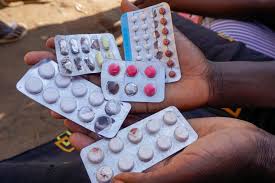
In the bustling informal markets that serve many of Zimbabwe’s communities, vendors offer a startling array of goods, from basic household necessities like rat poison and mops to a more dangerous commodity: prescription medication.
This illicit trade operates in the shadows. Sellers dispense powerful drugs without requiring prescriptions, and some even offer on-the-spot diagnoses despite having no medical qualifications. The medication is often counterfeit, and the constant threat of police raids forces vendors to conceal their stock, revealing it only to trusted customers.
The demand is palpable. One resident of Bulawayo, who asked to remain anonymous for fear of reprisal, admitted to regularly purchasing contraceptive pills from these vendors and seeking their advice when she is ill. She is fully aware that the drugs could be expired or completely fake, but the risk does not deter her.
“I buy them because they are cheap,” she stated simply, highlighting the desperate calculus driving this underground market.
Zimbabwe is currently experiencing a flood of counterfeit medicine, a crisis fueled by the expansion of informal economies and intense consumer demand for affordable healthcare products. Law enforcement agencies routinely impound illegal pharmaceuticals. In a prominent example this past January, the Medicines Control Authority of Zimbabwe discovered counterfeit rabies vaccines in circulation, their packaging expertly mimicked to look like legitimate imports from India, a major supplier of medicines to the country.
The precise supply chain for these fake vaccines remains unclear. However, experts note that a significant volume of counterfeit products pours into Zimbabwe’s informal markets through its porous borders with neighboring Zambia, where fake Indian medicines are cheap and easily obtained.
The consequences of this trade are devastating. A 2022 report by the United Nations Office on Drugs and Crime estimated that falsified medicines are responsible for approximately 250,000 deaths each year in sub-Saharan Africa alone.
The harm extends beyond immediate fatalities. Public health experts warn that even when these drugs are not lethal, they can cause severe long-term damage, such as contributing to the global rise of antibiotic-resistant bacteria.
A Global Problem with Local Consequences
The distribution of fake and substandard medicines is a highly profitable global criminal enterprise. A 2020 study by the Pacific Research Institute estimated the value of this illicit market to be between $200 billion and $431 billion annually.
India is a primary source, where a pharmaceutical sector comprising both reputable manufacturers and unregulated producers creates significant challenges for oversight and quality control.
The African continent is disproportionately affected. According to the World Health Organization, Africa accounted for a staggering 42% of all detected cases of fake and substandard medical products between 2013 and 2017.
In Zimbabwe, while leaky borders facilitate the trade, it is ultimately driven by profound domestic issues. The country’s decades-long economic crisis has crippled the public healthcare system, leaving hospitals frequently without basic medicine. Patients are often given a prescription and told to source the medication elsewhere.
With domestic production covering only 30% of essential drug needs, imported medicines sold in formal pharmacies are prohibitively expensive for many. For a population struggling with widespread poverty, the dangerous alternatives offered by informal vendors have become, for many, the only option.
Follow Zim GBC News on Social Media:
·X (Twitter): @ZimGbc ·Instagram: @ZimGBCNews
·TikTok: @ZimGBCNews_01 ·Facebook: Zim GBC News
·YouTube: Zim GBC News
Get real-time alerts on WhatsApp:
+263 773 820 323
Zim GBC News | Global News From An African Perspective©2025