

Kieth Jeketera Gender and Community reporter
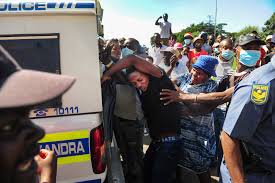
In the bustling streets of Johannesburg and Durban, a disturbing trend has cast a shadow over South Africa’s reputation as a beacon of hope in Africa. Operation Dudula and March and March, groups purportedly acting in the name of protecting South African interests, have been blocking foreign nationals – many with valid permits – from accessing critical healthcare services.
The impact ripples through communities, leaving trails of suffering, fear, and outrage.
Nana, a pregnant woman from Zimbabwe, clutching her swollen belly, was turned away from a public clinic in Gauteng by members of Operation Dudula.
“They said I wasn’t South African, though I have a ZEP permit allowing me to live and work here,” she recounted tearfully.
Denied prenatal care, Nana’s anxiety echoes that of countless others facing similar rejection. For people living with HIV, like Tomas from Malawi, accessing antiretrovirals became a desperate struggle when March and March protesters blocked clinic doors.
“I have permits. I contribute here. Why treat me like I’m invisible?” Tomas asked, his voice shaking.
Beyond Xenophobia: A Moral Quagmire
Critics – including South Africa’s Health Minister Aaron Motsoaledi and opposition leaders like Julius Malema of the EFF – lambast Operation Dudula’s actions as xenophobic and tantamount to harm.
“Denying healthcare isn’t different from killing,” Motsoaledi stressed, pointing to Section 27 of South Africa’s Constitution guaranteeing healthcare access for all, regardless of nationality.
The Democratic Alliance (DA) pushes for public order policing to safeguard this right, warning that excluding foreign nationals from healthcare could spark communicable disease outbreaks harming South Africans too.
Motsoaledi highlighted a jarring reality: about 6 million South Africans are undocumented.
“Why focus so harshly on foreign nationals with permits?” he queried, underscoring the complexity of the issue.
Yet Operation Dudula and March and March appear undeterred, fueling community anguish.
Community Scars and Family Fractures
In townships like Alexandra, residents with parents and relatives working in South Africa live in trepidation.
“My mother’s Malawian, works here legally. Now she fears going to hospital,” said Sipho, a young South African whose mixed heritage family feels trapped.
International voices, including Doctors Without Borders, condemn the groups’ tactics, especially harm to vulnerable pregnant women and people with HIV.
Organizations outside South Africa decry these acts.
“They will not win this fight,” urged voices from abroad, aligning with local pleas for tolerance. South Africans like Lebo, reflecting on her diverse community, lament the discord. “We’re better than this. We’ve welcomed so many – why turn away now?”
As tensions simmer, government intervention is imperative, advocates press. Without checks, the actions of Operation Dudula and March and March risk escalating, deepening societal wounds.
For Nana, Tomas, and countless others with valid permits seeking only to “live life like they are doing,” dignity and healthcare remain pressing battles.
Dudula and March and March jars are against ideals of inclusivity. As South Africa grapples with this challenge, the humanity of foreign nationals hangs in the balance – a test of the country’s commitment to rights enshrined in its founding laws.
Follow Zim GBC News on Social Media
-X(Twitter): @Zim Gbc Instagram @Zim GBCNews
-Tiktok @Zim GBC_01
Facebook:Zim GBC News
-Youtube:Zim GBC News
Get real time alerts on WhatsApp: +263 773 820 323
For in depth coverage visit our website: www.zimgbcnews.co.zw
Zim GBC News| Global News From an African perspective ©2025