

Siziba Thando
Health and environment reporter
www.zimgbcnews.co.zw
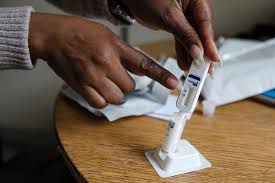
In the urgent mission to end the HIV epidemic, self-testing kits have emerged as a critical innovation. Praised for their privacy and convenience, these over-the-counter and mail-order tests have empowered millions to take control of their sexual health.
Yet, health advocates and clinicians are sounding the alarm on a sobering reality: the very attributes that drive their popularity also mask significant and potentially dangerous drawbacks.
A deeper investigation reveals that without proper context and support, the journey from opening the kit to reading the result is fraught with risks that can lead to false reassurance, psychological trauma, and critical delays in life-saving care.
The Perilous Gap: Understanding the “Window Period”
The most formidable risk associated with self-testing is the potential for a false negative—a devastating scenario where an individual is infected but receives a negative result.
This danger stems from a fundamental virological concept known as the “window period.” This is the gap between initial infection and the point at which a test can detect the virus’s biomarkers, such as antibodies or antigens.
“The science is clear,” explains nurse Onaranella Dube.
“After exposure, the virus needs time to establish itself and for the body to produce a detectable immune response. A test taken during this window simply cannot see the infection yet.”
An individual who tests too soon—for instance, within weeks of a potential exposure—may be falsely reassured. Believing themselves negative, they might unknowingly engage in behaviors that transmit the virus and, crucially, postpone seeking the medical care they urgently need. This isn’t a product failure; it’s a critical gap in user education that can have life-altering public health consequences.
The Alone Moment: The profound absence of Counseling
In a clinical setting, the act of testing is wrapped in a support system. The moment of result delivery, especially a reactive (preliminary positive) one, is handled with trained professionalism and empathy. With self-tests, that safety net vanishes.
“The crushing weight of isolation cannot be overstated,” says Philani Moyo, a licensed counselor
“In a clinic, they provide emotional first aid the instant a result is delivered. We explain that it’s preliminary, we immediately outline the confirmatory testing process, and we begin linking them to care right there and then. It’s a roadmap out of that moment of crisis.”
At home, an individual faces that moment utterly alone. The shock, fear, and confusion of a reactive result can be paralyzing. Without a professional to guide them, they may not understand the need for a confirmatory lab test, leading to severe psychological distress and, in the worst cases, causing them to avoid next steps altogether, delaying treatment indefinitely.
Human Factor: The Margin of Error in Uncontrolled Environments
While manufacturers design self-tests for simplicity, they are diagnostic tools that remain vulnerable to user error outside a controlled medical environment.
Potential pitfalls are numerous:
· Improper Storage: Kits left in extreme temperatures can degrade, rendering them unreliable before they’re even used.
· Technical Missteps: Incorrectly swabbing gums, collecting an insufficient blood sample, or misapplying the developer solution can all skew the results.
· Result Misinterpretation: Reading the test outside the strict time window or misreading a faint test line—which indicates a reactive result—can lead to a false sense of security or an incorrect conclusion.
A Healthcare Dead End: The Disconnect from Continuous Care
Perhaps the most systemic flaw of the self-test is its isolation from the broader healthcare continuum. A clinical visit is a gateway; a self-test can be a dead end.
A negative result in a doctor’s office opens a conversation about prevention strategies, like PrEP (pre-exposure prophylaxis). A positive result triggers an immediate, seamless referral to specialists, support groups, and treatment programs.
In contrast, a self-test provides a result and nothing more. There is no automatic connection to prevention resources, no screening for other common STIs, and no guide to navigate the complex healthcare system. The burden to act falls entirely on the individual—a daunting task for anyone, but especially for someone potentially reeling from a positive result.
A Powerful but Imperfect Tool
Health authorities are clear: HIV self-tests are a powerful public health tool that has drastically increased testing rates among hard-to-reach populations. However, they are an entry point, not a comprehensive solution.
The consensus among experts is that education is the essential counterweight to these risks. Potential users must be informed about the window period, the necessity of following instructions meticulously, and the critical importance of having a plan for a reactive result—including seeking confirmatory testing at a clinical facility.
Used wisely, self-tests are a revolutionary step forward. But for a diagnosis that carries such weight, the guidance, support, and certainty provided by a healthcare professional remain irreplaceable.
Follow Zim GBC News for More Updates:
🌐 Website: www.zimgbcnews.co.zw
🐦 X (Twitter): @ZimGbc
📘 Facebook: Zim GBC News
▶️ YouTube: Zim GBC News
Zim GBC News©2025