
Beatrice Kumbana Political Reporter www.zimgbcnews.co.zw
OPINION
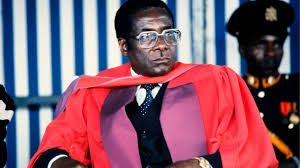
BULAWAYO — The final, frail words of the late President Robert Gabriel Mugabe continue to haunt Zimbabwe’s political landscape. In a poignant farewell, he declared,
“President Mnangagwa was not elected; he is an imposition of the army. He did not just betray me, but he betrayed the whole nation by denying democracy.”
This was not merely the bitter lament of a deposed leader; it was a stark diagnosis of a national ailment that continues to afflict the nation—a deep-seated crisis of democratic legitimacy.
Mugabe, who ruled Zimbabwe with an iron fist for nearly four decades, had long viewed Emmerson Mnangagwa as a protégé and a political son. Their relationship, forged in the trenches of the liberation struggle, shattered in November 2017 when Mnangagwa, with decisive military backing, orchestrated a coup that ended Mugabe’s reign. Dubbed “Operation Restore Legacy,” the military intervention was justified as a necessary measure to rescue the nation from corruption and economic collapse. Yet, for many, it was a blatant subversion of the constitutional order, replacing one form of authoritarianism with another.
The Coup and the Illusion of a New Dawn
Emmerson Mnangagwa’s ascent to power, under the shadow of tanks, was swiftly rebranded as a “peaceful transition.” His return from exile was met with a fleeting wave of optimism, encapsulated in his promise that “Zimbabwe is open for business.”
He pledged a break from the past: economic revival, democratic openness, and national reconciliation.
However, the reality of the last eight years has failed to match the rhetoric. The military’s kingmaking role did not end with the coup; it became entrenched within the state’s architecture. As noted by the International Crisis Group, the military’s deep involvement in politics and the economy has severely undermined democratic institutions and eroded public trust.
This disillusionment is quantified in the nation’s voting patterns. The Zimbabwe Electoral Commission (ZEC) reported a voter turnout of only 50.8% in the contentious 2018 elections—a figure that plummeted further in subsequent polls, reflecting a profound civic despair and a lack of faith in the electoral process.
A Deepening Economic Abyss
The economic picture under Mnangagwa’s rule has been one of catastrophic failure. The much-touted “open for business” slogan rings hollow as the economy continues to languish. Hyperinflation, a ghost from the Mugabe era, returned with a vengeance, soaring to 837.53% in July 2020 and remaining persistently high, effectively annihilating the value of the Zimbabwean dollar. Foreign direct investment remains anaemic, scared away by policy inconsistency, corruption, and political risk.
The human cost is staggering. The World Bank estimates unemployment hovers around 80%, with youth unemployment even higher. Millions of skilled Zimbabweans have joined the diaspora, their remittances becoming a critical lifeline for families left behind. The majority of those who remain struggle to afford basic necessities, with civil servants and the working poor trapped in a cycle of poverty that Mnangagwa’s administration has been unable to break.
The More Things Change: Repression in a New Guise
Perhaps the most damning indictment of the “New Dispensation” is its human rights record. While Mugabe’s regime was notorious for its brutal and overt crackdowns on dissent, Mnangagwa’s government has perfected a more insidious form of repression. It operates behind a veneer of legality and rhetorical commitment to freedom.
As one Zimbabwean citizen, who requested anonymity for fear of reprisal, stated,
“The promise of freedom has often been enforced by the same oppressive tactics.”
Organisations like Human Rights Watch and Amnesty International have extensively documented a systematic pattern of abuses. These include the use of sophisticated surveillance technology to target activists, the weaponization of the law through arbitrary arrests on trumped-up charges, and brutal crackdowns on peaceful protests, such as the post-election violence in 2018 and the fuel protests in 2019 that saw soldiers deployed to shoot civilians.
The arrest of journalists like Blessed Mhlanga of Alpha Media Holdings for being “loudly opinionated” exemplifies the regime’s intolerance for critical voices and its contempt for the very freedoms it professes to uphold.
The Known Devil vs. The Unknown One
A common proverb making rounds in Zimbabwe captures the national sentiment:
“Better the devil you know than the devil you don’t.”
Mugabe’s authoritarianism was predictable—a clear, if brutal, social contract defined by overt suppression, media censorship, and rigid control.
Mnangagwa’s rule, by contrast, is seen by many as a more dangerous and uncertain proposition. It is a regime that speaks the language of reform while practising the politics of patrimony and violence. It offers economic promises that consistently fail to materialize, creating a perpetual state of anxious uncertainty.
This stealthy perpetuation of harm, wrapped in the language of change, has left citizens navigating a landscape of broken promises and a future that feels increasingly precarious.
A Nation at a Crossroads
Mugabe’s parting words echo with chilling prescience. Zimbabwe stands at a critical juncture, grappling with the compounded legacies of two leaders whose rules, though different in style, have resulted in profound national distress. The betrayal Mugabe spoke of is felt not as a personal grievance, but as a collective national experience—a betrayal of the democratic aspirations of millions.
The path forward is fraught with challenges.
The struggle for genuine democracy, economic justice, and accountability is far from over. It requires a fundamental restructuring of power away from the military and towards legitimate civilian institutions. The voices of the people, long suppressed, must rise to demand a true break from the cycle of betrayal.
The burden of the past must not dictate the future; the nation must choose to break free.
Follow Zim GBC News for updates: 🌐www.zimgbcnews.co.zw 🐦X (Twitter): @ZimGbc 📘Facebook: Zim GBC News ▶️YouTube: Zim GBC News
Zim GBC News | Global News from An African Perspective©2025