

Harare Correspondent
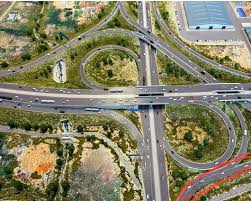
Harare – In a significant move to tackle chronic traffic congestion and modernize the capital’s infrastructure, the Government has announced plans to construct three new road interchanges in Harare within the next year.
Transport and Infrastructural Development Minister, Hon. Felix Mhona, revealed the ambitious plan on Thursday during the official opening of the completed section of Alpes Road.
The new interchanges will be built at key intersections: the Mabvuku turn-off, Harare Drive and Mutare Road, and Harare Drive and Airport Road.
Minister Mhona emphasized that the government’s infrastructure drive is gaining momentum, stating,
“These projects are not stopping with the completion of the recently opened Trabablas Interchange. That was only the beginning. We are determined to build more such facilities because they are critical to the smooth flow of traffic.”
He confirmed that work is already underway at the Mabvuku site, signaling the start of this extensive decongestion program.
The announcement was coupled with details of major upgrades to several arterial roads. Alpes Road is slated to be widened all the way to Borrowdale Road, with a future extension planned into Mashomaland Central province.
The Borrowdale Road corridor will also see massive expansion, with the stretch from State House being developed into a four-lane highway, and the section from Borrowdale Police Station to Domboshava transformed into a six-lane thoroughfare.
Highlighting the economic importance of these projects, Mhona pointed out that the Alpes Road upgrade will support tourism and business, serving critical areas like Wild Geese Lodge and the Geo Pomona Waste Management Company.
“The idea behind our planning is to ensure roads are not only trafficable but also serve the growing economic and social needs of the country,” he said.
In a move to ensure transparency and efficiency, the Minister announced that a state-owned entity will lead the charge.
“When projects are awarded to private contractors, the public often raises red flags over possible corruption. With CMED (Central Mechanical Equipment Department), which is a government entity, there is no room for such suspicions and procurement processes are also shortened,” Mhona stated, outlining a key measure to curb graft in road tenders.
This comprehensive infrastructure development, guided by the national philosophy “Nyika Inovakwa Nevene Vayo” (A nation is built by its own people), is expected to dramatically transform Harare’s road network into a modern system capable of meeting the city’s growing demands.
Zim GBC News | Global News From An African Perspective©2025