

Charity Nkomo
Gender Affairs and Community Reporter
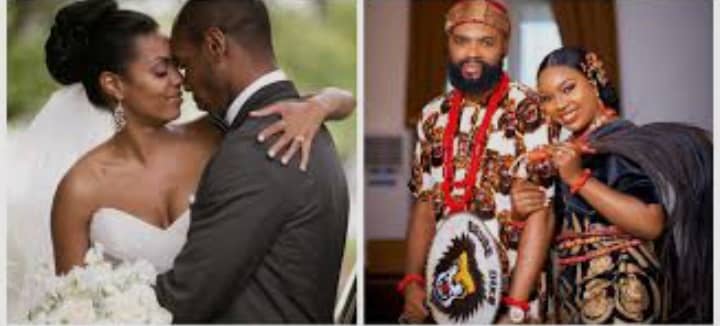
In an era defined by modernity, social media hashtags, and designer dresses, the white wedding has become the hallmark of matrimony for many Africans. Yet, as Western-style ceremonies grow in popularity, cultural activists and elders are sounding the alarm, warning that deeply rooted African traditions risk being erased.
Today, countless couples bypass or downplay traditional rites, instead channeling their resources into white weddings—complete with church aisles, white gowns, diamond rings, and viral-worthy photoshoots.
In modern weddings, the ring symbolizes status and commitment. Yet, in many African cultures, marriage was never validated by jewelry but by rituals, family consensus, and the successful payment of lobola (bride price).
Now, couples who opt for only traditional ceremonies—without a white wedding—are sometimes not regarded as “truly” married.
“We were taught to see our traditions as backward,” said Sifiso Nyathi, a cultural advocate.
“Today, a man can pay thousands for a ring but complain when asked to pay lobola. That says something about how deeply we’ve been conditioned.”
Nyathi argues that many young Africans have been Westernized to the point where they no longer value their own heritage.
“You’ll hear people say, ‘We can’t go back to wearing amabhetshu (traditional attire),’” remarked Mthokozisi Tshuma, 55.
“But what they don’t realize is that by abandoning these customs, we’re letting go of our identity.”
Critics contend that for some, white weddings are no longer about love or commitment—but appearances. The focus has shifted to posting professional photos, hiring celebrity decorators, and securing features on wedding blogs. Some couples, observers say, marry for the wedding, not the marriage.
However, others view the trend as a natural evolution.
“Though white weddings are Western, they’ve become popular across cultures,” said one commentator.
“Some even blend traditional elements into their ceremonies, adding meaning. If done sincerely, a white wedding can be a beautiful celebration of love—not just a show-off.”
Yet, the pressure to conform can have dire consequences.
“Some marry due to family expectations, not love,” the commentator added. “This leads to heartbreaking outcomes—divorce, even suicide—fueled by shallow commitments.”
Another perspective suggests that white weddings serve as a middle ground in intertribal unions, where differing traditions may clash.
“In marriages between, say, Shona and Ndebele partners, a white wedding can dilute cultural differences,” explained one analyst.
“Modern lifestyles demand flexibility, and not all traditions fit today’s world. The real value lies in the couple’s commitment, not the ceremony’s style.”
Still, traditionalists warn that Africa’s cultural identity is at stake.
“Culture doesn’t die overnight,” said Cowdray Park resident Mr. Ngwenya.
“It fades with each generation that abandons it. Soon, traditional weddings may exist only in textbooks.”
Amid the debate, some urge a return to roots, advocating for traditional weddings to be reclaimed as fashionable and meaningful.
“We must redefine what it means to be African in love,” Ngwenya added.
“It’s not about rejecting modernity—it’s about not rejecting ourselves.”
As discussions continue over whether white weddings signify progress or cultural loss, one reality is clear: the African wedding, once a deeply rooted institution, stands at a crossroads.
The choices made today may determine how future generations perceive their heritage—and themselves.
Zim GBC News©2025