
Innocent Sibonginkosi Ncube | Zim GBC News
Bulawayo – In a week of contrasting developments for Zimbabwe’s second-largest city, a legislator has brought light to thousands of residents while the local authority faces a colossal financial hurdle to fix the city’s bowels.
In a significant boost to one of Bulawayo’s most densely populated suburbs, Cowdray Park legislator Authur Mujeyi has overseen the installation of electricity transformers across three wards, bringing relief to households that have gone years without power.
The Zanu PF Bulawayo Province confirmed the development, stating that the MP had installed two transformers in Ward 28, two in Ward 15, and one in Ward 6. The party hailed the move as a direct alignment with President Emmerson Mnangagwa’s vision of “leaving no one and no place behind” as the country marches towards Vision 2030.
“In a major breakthrough, Hon Mujeyi has installed transformers in Ward 28 (two transformers), Ward 15 (two transformers) and Ward 6 (one transformer),” the provincial leadership posted on X.
Drawing a biblical parallel, the party added,
“As the Bible says, ‘Let there be light’ (Genesis 1:3), Mujeyi has indeed brought light to Cowdray Park.”
Mujeyi himself emphasized the transformative power of reliable electricity.
“Electricity is the lifeblood of development,” he said.
“I’m committed to ensuring that our community has access to this essential service, driving economic growth and improving livelihoods.”
Bulawayo’s US$500 Million Sewer Nightmare
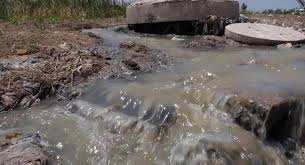
However, while one community celebrates electrification, the broader city of Bulawayo is staring down a sanitation crisis of monumental proportions. The City of Bulawayo needs nearly US$500 million to effectively resuscitate its ageing sewer reticulation system, some of which was installed more than six decades ago.
The alarming figure was revealed by the principal engineer for water and sanitation, Dumani Gwetu, during his presentation at the local authority’s two-day Trade Effluent and Water Recycling Indaba.
The projected investment, part of a 20-year masterplan drafted in 2012, is required to cover wastewater treatment works, outfall sewers, pump station refurbishment, and recycled water supply infrastructure.
“Wastewater treatment works account for the largest portion of the total budget, requiring an estimated US$193.2 million over the period under review,” said Eng Gwetu. He added a stark reality check:
“What is of importance to note is that since 2012, the city has only managed to use US$14 million due to largely strained financial inflows, among other factors.”
The consequences of the underfunding are being felt daily. The city’s 10 wastewater treatment plants, with a combined capacity of nearly 90 megalitres per day, are operating at less than 50%. Of the 18 sewer pump stations, only seven are operational, with most equipment over 70 years old.
This has led to a public health nuisance, with the city receiving between 80 and 110 sewer choke reports per day.
“A sewer choke is a gradual restriction of flow caused by the accumulation of debris and foreign materials,” Eng Gwetu explained, distinguishing it from a complete blockage which results in raw sewage overflow from manholes.
As Bulawayo residents enjoy the new lights in Cowdray Park, the rest of the City holds its breath, waiting for the financial intervention needed to fix a decaying system buried just beneath their feet.
Follow us for real-time updates:
· X (Twitter): @ZimGbc
· Instagram: @ZimGBCNews
· TikTok: @ZimGBCNews_01
· Facebook: Zim GBC News
· YouTube: Zim GBC News
Get real-time alerts on WhatsApp:
+263 773 820 323
For in-depth coverage, visit our website: www.zimgbcnews.co.zw
Zim GBC News | Global News From An African Perspective©2026