

Sithembinkosi L Jiyane
Political Reporter
www.zimgbcnews.co.zw
In a statement charged with urgency and conviction, the Labour & Livelihoods Committee of the Defend the Constitution Platform declared that workers across Zimbabwe stand at a historic crossroads, warning that both economic justice and constitutional legitimacy are being tested at the same time.
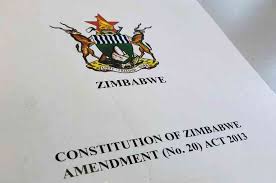
As the Cabinet of Zimbabwe and Parliament of Zimbabwe advance a bill to amend the Constitution, including proposals affecting leadership tenure and democratic accountability, the Committee urged citizens to reflect on a pressing question:
who really gains when constitutional protections are weakened?
It argued that history shows a consistent pattern: when accountability declines, the greatest burden falls on ordinary working people, from informal traders to farm and domestic workers.
“When safeguards shrink, it is the ordinary worker who carries the heaviest cost,” read part of the statement.
The statement invoked Section 65 of the 2013 Constitution like a rallying cry, reminding the nation that every person has the right to fair and safe labour practices and to a living wage.
Against that constitutional promise, it argued, the current statutory minimum wage of USD 150 under SI 186 of 2024 stands painfully small, describing it as a figure that cannot sustain a family, cannot preserve dignity, and cannot satisfy constitutional standards.
With emphatic urgency, the Committee demanded an immediate review through the Tripartite Negotiating Forum, the creation of a living-wage framework grounded in real costs, and alignment with globally recognized benchmarks, insisting that a Constitution defended in speeches must also be enforced in reality.
Turning to overlooked sectors, the Committee warned that excluding agricultural and domestic workers from full minimum-wage protection contradicts both Section 56 on equality before the law and Section 65 on labour rights. In language that carried both moral weight and political edge, it stressed that these workers are not peripheral figures but the very foundation of the economy.
It pointed to commitments contained in what it called the People’s Resolution, pledges to end exploitative labour practices, protect vulnerable sectors, and ensure constitutional rights are never selective, declaring that labour rights cannot be tiered if constitutional protection is to mean anything at all.
The tone sharpened further when addressing the presumptive rental tax affecting small traders and micro-enterprises.
With the informal sector now the country’s largest employer, the Committee warned that any policy automatically raising rental burdens threatens livelihood security, job retention, and economic stability.
Economic governance, it argued, must serve citizens rather than punish survival, urging immediate engagement to ensure the tax does not become a regressive mechanism that transfers financial strain onto those least able to bear it.
Framing the debate in sweeping constitutional terms, the statement declared that economic justice and constitutional legitimacy are inseparable twins.
It cautioned that attempts to extend leadership tenure without a referendum signal a shift from accountability toward consolidation of power, adding that workers intuitively recognize this pattern.
The Committee argued that a government unwilling to seek renewed public consent is just as unlikely to restore economic dignity to its citizens.
Citing what it called the doctrine of periodic sovereignty, the idea that authority must continually return to the people, it cautioned that without this democratic renewal, economic justice can shift from being a protected right to something uncertain and conditional.
“When power stops returning to the people, justice stops being assured.”
In a resolute finale, the Committee called for immediate structured engagement through lawful platforms, full implementation, not dilution, of the 2013 Constitution, a national referendum on any amendment affecting democratic tenure, and economic reforms that place working-class dignity at the center of national priorities.
It declared that defending the Constitution is the same battle as defending labour rights, and that the fight for a living wage cannot be separated from the fight for constitutional governance.
Zimbabwe’s workers, the statement concluded with dramatic force, did not struggle for political independence only to inherit economic precarity and weakened democratic safeguards.
The Committee pledged it remains peaceful, lawful, and unwavering, insisting that constitutional legitimacy must come first and worker dignity must always prevail.
Stay Connected with Zim GBC News:
· X (Twitter): @ZimGbc
· Instagram: @ZimGBCNews
· TikTok: @ZimGBCNews_01
· Facebook: Zim GBC News
· YouTube: Zim GBC News
Get real-time alerts on WhatsApp:
+263 773 820 323
For in-depth coverage, visit our website: www.zimgbcnews.co.zw
Zim GBC News | Global News From An African Perspective©2026