

Thursday 22 January 2026
Innocent Sibonginkosi Ncube | Zim GBC News
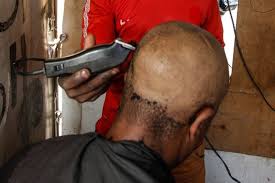
A new South African medical study has raised significant public health concerns after finding that barber shop clippers can be contaminated with blood and viruses, posing a potential risk for transmitting infections such as hepatitis B.
While the study did not detect HIV on the tested equipment, researchers emphasize the need for improved sterilisation practices in both formal and informal grooming settings.
The research, published in the South African Medical Journal, was led by Professor Nonhlanhla P. Khumalo of the University of Cape Town’s Division of Dermatology. It involved collecting fifty clippers from barbers in three Cape Town townships immediately after they were used for a “clean shave” haircut—a style requested by 78% of clients.
Laboratory analysis revealed that 42% of the clippers tested positive for haemoglobin beta, a blood-specific marker. Although no HIV was detected, four clippers (8%) tested positive for hepatitis B virus, with enough viral DNA present to pose a verifiable transmission risk.
“This study confirms that there is significant contamination of barber hair clippers with blood and blood-borne viruses,” the authors stated.
“Hepatitis B was detected with enough DNA copies to pose a risk of transmitting infection. Although HIV was not detected in this small study, the risk of transmission should be quantified.”
The findings have resonated locally. At the Out Patient Department of Bulawayo’s Mpilo Central Hospital, where medical staff conduct daily health education sessions, the issue was recently raised.
A patient asked a nurse if HIV could be acquired from sharing razor clippers with an HIV-positive person. The nurse, while non-committal on the specific transmission risk, strongly advised against sharing such instruments, highlighting the precautionary principle.
Zim GBC News observations in several urban areas reveal that many hair salons and barber shops do not consistently sanitise clippers between clients. Furthermore, City Council health inspectors appear not to routinely penalise establishments for this lapse in hygiene protocol.
Public health experts stress that while HIV is fragile and degrades quickly outside the body, and no documented cases of barber shop transmission exist, the principle of prevention is critical.
“Any tool that draws blood, even microscopically, can be a vector for infection if not properly sterilised,” said a local public health officer who spoke on condition of anonymity.
“The study underscores the importance of enforcing basic hygiene standards in all personal grooming services.”
The researchers have called for further investigation into barber clipper sterilisation methods and have suggested public education campaigns promoting personal clipper use for high-risk haircuts, akin to not sharing a toothbrush.
FOLLOW US FOR REAL-TIME UPDATES:
· X (Twitter): @ZimGbc
· Instagram: @ZimGBCNews
· TikTok: @ZimGBCNews_01
· Facebook: Zim GBC News
· YouTube: Zim GBC News
Get real-time alerts on WhatsApp:
+263 773 820 323
For in-depth coverage, visit our website: www.zimgbcnews.co.zw