

By Dennis Ndlovu I Zim GBC News
The Midlands Province must harness the critical role of all sectors of society to drive tangible improvements in livelihoods, the region’s minister of state has declared.
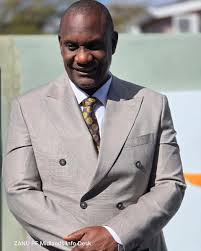
Opening a key strategic planning workshop in Bulawayo on Tuesday, the Minister of State for Provincial Affairs and Devolution for Midlands Province, Owen Ncube, set out a vision of development built on deep collaboration.
In a speech detailing progress and plans, Minister Ncube directly appealed for stronger partnerships.
“Stakeholders such as the academia, private sector, church organizations, community based organizations play a critical role in our development, from one; planning, implementation, monitoring and evaluation through positive collaboration in resource mobilization and technical support, research and development,” he stated.
This remark, framing non-governmental groups as essential partners, underscored a shift towards an inclusive model of governance. He stressed that their involvement should span the entire project cycle, from initial design to final assessment.
The Minister warned that cooperation must be substantive, not symbolic.
“Our cooperation therefore must yield tangible results as well as promote critical thinking and creativity that addresses challenges faced by our communities,” Ncube asserted.
He moved beyond rhetoric, demanding that partnerships produce measurable outcomes and innovative local solutions to provincial problems.
He further instructed planners to formally recognise these alliances.
“In this endeavor our plans should clearly identify, reflect and built on those mutual partnerships,” he directed.
This instruction made the integration of external stakeholders a formal requirement for the province’s strategic documents, suggesting a structured rather than ad-hoc approach to collaboration.
Minister Ncube framed the province’s mission in unambiguous terms.
“Improving the livelihoods of our communities is a collective responsibility buttressed by diligent planning,” he said.
This pithy statement served as a central theme, defining development as a shared duty and positioning meticulous planning as its essential foundation.
Turning to current affairs, the Minister in an exclusive interview cited specific successes under Zimbabwe’s Second National Development Strategy (NDS1).
“As we’re now in NDS2, where we’ve got infrastructure development and agriculture as a priority, as a province we have surpassed wheat production targets and also we’re receiving good rains,” he reported, striking an optimistic tone on agricultural output.
He expanded on this positive forecast for the current season.
“Which means the Midlands province will have good yields for all our crops which are grown in all our districts like maize, soya beans, and small grains,” Ncube projected, pointing to beneficial weather as a catalyst for broad-based crop success.
On infrastructure, the Minister pointed to visible, physical change since the political transition of November 2017.
“On construction, since the inception of the Second Republic in November 2017, we have seen a lot of infrastructure development. For example, in Kwekwe district alone we have more than 200 new shops which have been constructed and also housing schemes, some are private owned and some are council owned to be commissioned in 2026 under NDS2,” he detailed.
FOLLOW US FOR REAL-TIME UPDATES:
・X (Twitter): @ZimGbc
・Instagram: @ZimGBCNews
・TikTok: @ZimGBCNews_01
・Facebook: Zim GBC News
・YouTube: Zim GBC News
Get real-time alerts on WhatsApp:
+263 773 820 323
Zim GBC News | Global News From An African Perspective©️2026