

Innocent Sibonginkosi Ncube | Zim GBC News
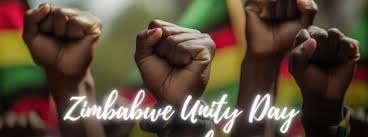
BULAWAYO – Unity Day, a national holiday commemorating the 1987 unity accord between ZANU PF and PF ZAPU, was observed with official ceremonies at the State House on Wednesday, featuring speeches from the President and the Speaker of Parliament, Jacob Mudenda, who also serves as ZANU PF’s Secretary-General.
However, on the streets of Bulawayo, the day was largely indistinguishable from any other. For many residents, the holiday was an unaffordable luxury.
“There was no holiday to commemorate as life was hard and there were families to fend for. So there was no resting,” several citizens told Zim GBC News, echoing a sentiment felt across the City.
The bustle of hustling and vending continued unabated, with many shops choosing to operate normally.
The subdued atmosphere marked a stark contrast to previous years, where the government marked the day with galas and the high-profile football clash between Highlanders FC and Dynamos FC. For Bulawayo residents, the rhetoric of unity rings hollow against a backdrop of persistent economic hardship.
“The Unity which the government of ZANU PF is clamouring about did not bring any meaningful change to the suffering masses of Bulawayo,” said one resident.
“The populace of this region is still marginalized.”
The city’s industrial decline was cited as a core grievance.
“The factories were caused to close, Bulawayo lost its Industrial Capital status as many companies relocated to Harare or shut down. There are no jobs for the elderly let alone the youths. Life is Kilimanjaro mountain to climb. So, hustling and vending we will, we have to survive.”
As the formal holiday passed, a fierce and painful historical debate resurfaced online, centering on the legacy of the late Vice President Joshua Mqabuko Nyongolo Nkomo and the Gukurahundi conflicts of the 1980s.
A social media user, referencing Nkomo’s own words, argued that the tragedy was a political, not tribal, project.
“If you listen carefully to Joshua Nkomo’s speeches, you will notice that he never identified himself by tribe… Gukurahundi was not a conflict between the Shona and Ndebele people. Rather, it was a genocide orchestrated by Robert Mugabe and ZANU PF,” the user stated, emphasizing a distinction between the party’s actions and the Shona people as a whole.
This perspective was met with sharp rebuttal from others carrying the memory of loss.
“Never try to buy peace by merely marinading issues,” countered another commentator.
“Absolving Shona speaking people from the atrocities is unfortunate and misleading… Gukurahundi agenda was a tribal crusade which was well received by the Shona speaking people, Period!!! They benefited and are still benefiting.”
The heated exchange underscores the unresolved and complex nature of the nation’s past, a shadow that continues to fall over present-day commemorations of unity.
The debate highlights the challenge of reconciling official narratives with lived experiences and historical trauma, particularly in regions like Bulawayo that feel both economically and historically sidelined.
Follow Zim GBC News for in-depth coverage and analysis:
· X (Twitter): @ZimGbc
·Instagram: @ZimGBCNews
·TikTok: @ZimGBCNews_01
·Facebook: Zim GBC News
·YouTube: Zim GBC News
Get real-time alerts on WhatsApp:
+263 773 820 323
For more stories, visit our website: www.zimgbcnews.co.zw
Zim GBC News | Global News From An African Perspective©2025