

Zim GBC News | Crimes and Courts
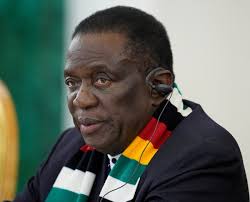
HARARE – In a landmark constitutional challenge, twenty-five elected members of Zimbabwe’s Provincial and Metropolitan Councils have taken President Emmerson Mnangagwa and Parliament to the Constitutional Court, accusing them of a “gross dereliction of duty” for failing to implement the country’s devolution framework 12 years after the adoption of the 2013 Constitution.
The applicants, led by Councillor Jeff Tafadzwa Chaitezvi, are seeking a court order to compel the state to enact the long-awaited Provincial and Metropolitan Councils Act within 180 days.
“Despite the passage of twelve years since the Constitution came into effect, no Act of Parliament has been enacted to establish the Provincial and Metropolitan Councils,” Chaitezvi stated in his founding affidavit.
“This failure cannot be reasonable given the lapse of time. It constitutes an unreasonable failure to fulfil a constitutional obligation.”
The legal action, filed under Section 167(2)(d) of the Constitution, highlights what the applicants describe as a critical governance failure. The elected councillors, who won their seats in the August 2023 harmonised elections, argue they have been unable to assume office or perform their duties due to the legislative vacuum.
“We were required to appoint chairpersons at our first sitting after the general election,” the affidavit reads.
“We did not have our first sitting because there is no law that sets out or establishes provincial and metropolitan councils or their structures.”
The case names Parliament as the first respondent and President Mnangagwa as the second respondent, citing their shared responsibility under the Constitution to enact laws necessary for the “peace, order and good governance of Zimbabwe.”
The applicants, represented by Tsunga Bamu Law International, argue that while the government has passed “several other Acts of Parliament” not mandated by the Constitution since 2013, it has consistently neglected its core devolution obligations.
“At every State of the Nation Address since 2013, the President has outlined a legislative agenda,” Chaitezvi noted.
“Conspicuously absent in all these has been the Act envisaged under Sections 270(2) and 273(1). That omission alone shows there is neither intention nor willpower to give effect to this constitutional obligation.”
The legal challenge seeks to revive Zimbabwe’s stalled devolution agenda, which was meant to empower provincial authorities and promote equitable development across regions – a key reform promise of the 2013 Constitution that remains unfulfilled.
The applicants are also seeking punitive costs against both respondents, arguing that such a prolonged breach of constitutional duty “should not go unpunished.”
The matter is yet to be scheduled for hearing in the Constitutional Court.
Follow us on social media for the latest updates:
· X (Twitter): @ZimGbc
· Instagram: @ZimGBCNews
· TikTok: @ZimGBCNews_01
· Facebook: Zim GBC News
· YouTube: Zim GBC News
Get real-time alerts on WhatsApp:
+263 773 820 323
For in-depth coverage, visit our website: www.zimgbcnews.co.zw
Zim GBC News | Global News From An African Perspective©2025