

Innocent Sibonginkosi Ncube
BULAWAYO – Matabeleland North is facing a dual crisis, emerging as a national hotspot for outbound migration while its rural communities live in fear of devastating human-wildlife conflict, according to a new government report and on-the-ground testimonies.
The 2024–2025 Zimbabwe Livelihoods Assessment Committee (ZimLAC) report reveals that Matabeleland North has some of the highest migration rates in the country, with 12.6% of households moving to urban areas and 7.8% leaving Zimbabwe entirely.
The exodus is driven by a desperate search for work and education.
“I had to send my son to Bulawayo because there was simply no work here,” said Thabani Ncube, a smallholder farmer in Lupane.
“Even piece jobs have dried up. At least in town, he can hustle and maybe support the family.”
Experts warn this trend threatens to hollow out rural communities.
“This is a double-edged sword,” explained Dr. Nomalanga Sibanda, a livelihoods researcher.
“Families may benefit from remittances, but local economies lose critical labour and skills.”
‘We Hear Hunger Coming’: The Plight of Hwange’s Farmers
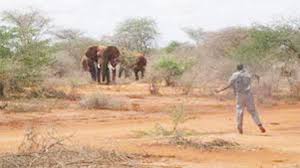
For those who remain, a different battle rages. In Hwange West, farmers face relentless attacks from predators spilling out from nearby forest areas and the vast Hwange National Park.
Farmer Members Ndlovu has meticulously recorded his losses.
“I have lost six cows over the years. Two bulls, four females,” he said, pointing to the reinforced thorn branches on his kraal.
“They come and attack in the kraals, mainly targeting goats and donkeys. Sometimes they wipe out 11 or 12 goats in a single night.”
The trauma extends beyond livestock.
“We have abandoned our fields because elephants devour everything within a night,” Ndlovu added.
“If nothing changes, in ten years there will be no livestock left here.”
The emotional and economic toll is immense. Esline Ncube, a grandmother raising orphans in Masuwe village, lives in constant fear.
“I am looking after orphans, how do I explain to them that the goats they depended on for milk are gone?” she asked.
“The next victims will be us.”
A Call for Action and Compensation
Official statistics from the Zimbabwe Parks and Wildlife Management Authority (ZimParks) paint a stark national picture: between 2019 and July 2025, over 10,000 conflict incidents were reported, resulting in 370 human deaths and the loss of 3,086 livestock.
Local leaders are demanding urgent government intervention.
“Our call, which has gone beyond a plea, is for the government to compensate people who have lost their livestock,” said Councillor Given Moyo of Kachechete Ward.
“The economic loss is huge. Some people spent pensions buying cattle, young people invested in goats, all gone.”
While a new Parks and Wildlife Amendment Bill promises solutions, villagers are weary of waiting.
“They promise they will come, but it ends there,” said Ndlovu.
“We want ZimParks rangers living with us in the villages, trained and armed to kill or scare away these lions. Otherwise, we are finished.”
As Cllr Moyo poignantly summarized,
“At night, when lions roar, we don’t hear the sound of conservation; we hear hunger coming.”
Stay connected with us for the latest news:
· X (Twitter): @ZimGbc
·Instagram: @ZimGBCNews
·TikTok: @ZimGBCNews_01
·Facebook: Zim GBC News
·YouTube: Zim GBC News
Get real-time alerts on WhatsApp:
+263 773 820 323
Zim GBC News | Global News From An African Perspective©2025