

Business Reporter
HARARE – Amidst rampant daily power cuts and a national push towards solar energy, Zimbabwe is witnessing a perplexing construction boom of new fuel service stations, raising serious questions about urban planning, environmental safety, and the country’s commitment to a renewable future.
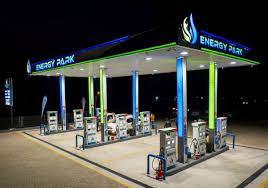
Along major urban corridors like Harare’s Samora Machel Avenue, gleaming new fuel stations stand mere metres apart, a sight replicated in cities like Bulawayo, Gweru, and Kadoma. This rapid expansion, licensed by the Zimbabwe Energy Regulatory Authority (ZERA), presents a stark contrast to households and businesses scrambling to adopt solar power to escape relentless blackouts.
The development has sparked concerns from residents, analysts, and environmentalists who question the logic of deepening fossil fuel dependency as the world pivots to renewables.
Questions of Planning and Ownership
A senior Harare City Council planner, who spoke to Zim GBC News on condition of anonymity, revealed that the approval process is often compromised.
“We are under immense pressure to approve these projects, some pushed by politically connected individuals,” the source said.
“In some cases, we are simply handed a directive and told to sign.”
Investigations suggest ownership of many new stations is murky, linked to companies with interests in fuel importation and mining. Analysts posit that the cash-rich, opaque fuel retail sector is an attractive channel for money laundering and foreign currency arbitrage.
Environmental and Health Risks Ignored
The siting of these stations has alarmed communities nationwide. Many have been built directly opposite schools or nestled within residential suburbs, flouting environmental guidelines.
“Putting petrol tanks next to homes is reckless. One accident could wipe out a neighbourhood,” said Charles Moyo, a concerned Harare resident.
Environmentalists warn of long-term groundwater contamination from leaking underground tanks and increased air pollution from congested traffic. An environmentalist with a local authority cautioned,
“Fuel leaks are silent killers. Once groundwater is contaminated, it is almost impossible to reverse.”
In response, Amukela Sidange, Environmental Education and Publicity Manager for the Environmental Management Agency (EMA), outlined the required safeguards.
“The Environmental Management Agency ensures that any development project… adheres to relevant environmental legislation and standards to minimise its ecological footprint,” she said.
She detailed that all service stations must undergo a comprehensive Environmental and Social Impact Assessment (ESIA) and adhere to strict construction standards, including double-walled tanks and leak detection systems.
A Contradiction in Climate Policy
This fossil fuel infrastructure boom occurs alongside government incentives for renewable energy, including duty rebates on solar equipment and reduced import tariffs for electric vehicles (EVs). ZERA itself has promoted electric mobility, commissioning the first EV charging station in Gweru last year.
This contradiction highlights a major policy conflict. Natural resource governance expert Tapuwa O’bren Nhachi stated,
“There is definitely a contradiction here… It’s like trying to quit smoking while opening cigarette shops.”
“Zimbabwe committed to a 40% reduction in greenhouse gas emissions by 2030, but flooding the market with new petrol stations creates infrastructure that will be used for decades. It’s counterproductive to our climate goals,” Nhachi added.
ZERA’s Stance
ZERA Chief Executive Officer, Edington Mazambani, defended the regulatory framework, stating it is aligned with the country’s renewable energy roadmap.
“Service stations are encouraged to embrace renewable energies and energy efficiency,” Mazambani said.
However, he confirmed that ZERA has no plans to mandate renewable energy features, such as solar rooftops or EV charging points, as a requirement for new service station licenses. ZERA licensed 996 fuel stations in 2024, with the 2025 licensing process still ongoing.
For now, the pumps keep multiplying, leaving a critical question unanswered: in a world shifting away from fossil fuels, will Zimbabwe’s fuel station boom prove to be a smart investment—or a stranded asset in the making?
Follow us for breaking news and updates:
·X (Twitter): @ZimGbc ·Instagram: @ZimGBCNews
·TikTok: @ZimGBCNews_01 ·Facebook: Zim GBC News
·YouTube: Zim GBC News
Get real-time alerts on WhatsApp:
+263 773 820 323
For in-depth coverage, visit our website: www.zimgbcnews.co.zw
Zim GBC News | Global News From An African Perspective©2025