
Beatrice Kumbana
Political Reporter
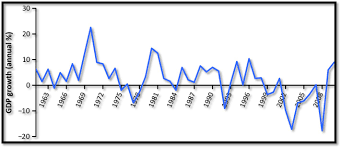
Bulawayo —Zimbabwe’s economy has faced significant challenges in recent years, largely attributed to unstable political issues.
Observers argue that the interplay between political instability and economic decline is evident in the country’s ongoing struggles.
The Link Between Politics and Economics
Political instability has long been a blockage to foreign direct investment, which is crucial for economic growth.
Despite the government’s “open for business” campaign, investor confidence remains low due to persistent political turmoil.
This lack of confidence is reflected in Zimbabwe’s currency inconstant, with the ZiG experiencing significant devaluation pressures, complicating business operations.
Fiscal mismanagement is another consequence of unstable politics.
Zimbabwe’s public debt has soared to $21.2 billion, raising concerns about sustainability and resource allocation.
Furthermore, frequent policy changes hinder economic growth; the Transitional Stabilization Program (TSP) has yet to be fully implemented due to these inconsistencies.
The manufacturing sector has not been spared, suffering from prolonged instability and contributing to a trend of deindustrialization.
Corruption has also thrived in this environment, with cartels exerting considerable influence over the economy, making it less competitive and stifling growth.
Key Economic Challenges
Zimbabwe faces numerous economic challenges:
- High Inflation: The country has experienced record inflation rates, eroding purchasing power.
- Debt Distress: Classified as being “in debt distress” by the IMF, Zimbabwe struggles to manage its liabilities.
- Energy Crisis: An inadequate electricity infrastructure hampers economic activities.
- Low Investment: Political instability and inconsistent policies block potential investors.
Insights from Hopewell Chin’ono
Journalist and activist Hopewell Chin’ono attributes Zimbabwe’s economic crisis frequent corruption, mismanagement, and nepotism rather than external sanctions.
He highlights several key issues:
- Corruption: Chin’ono points to government practices that drain resources, including inflated contracts for goods and services.
His investigations revealed a scandal involving the former Ministry of Health awarding overpriced contracts for COVID-19 supplies.
- Mismanagement: The government’s failure to effectively manage the economy has led to inadequate infrastructure, particularly in healthcare, with no new referral hospitals built since independence.
-Nepotism: The ruling party’s favouritisy has created unequal opportunities and hindered economic growth.
Chin’ono criticizes excessive government spending on luxury vehicles, noting that while ministers receive multiple cars, hospitals lack basic facilities.
Misplaced Priorities
Chin’ono emphasizes the government’s misplaced priorities, particularly in its spending habits.
For instance, a single luxury vehicle can cost $400,000—enough to build multiple maternity theaters, which are desperately needed as thousands of women face life-threatening situations during childbirth due to inadequate healthcare facilities.
Moving Forward
To address these challenges, experts suggest several potential solutions:
- Inclusive National Dialogue: Engaging various stakeholders in dialogue could help tackle Zimbabwe’s economic and political woes.
- Policy Reforms: Implementing consistent policies can attract investment and foster economic growth.
- Debt Clearance: Clearing debt arrears and restructuring existing obligations can help restore economic stability.
- Institutional Strengthening: Enhancing governance and reducing corruption are crucial for improving economic management.
Zimbabwe’s situation serves as a stark reminder of how unstable political structures can cripple economies.
As the nation tackles with its challenges, the need for effective governance and a commitment to reform has never been more urgent.
Follow Zim GBC News for updates:
🌐 www.zimgbcnews.co.zw
🐦 X @ZimGbc
📘 Facebook: Zim GBC News
▶️ YouTube: Zim GBC News
Zim GBC News©2025
May God Bless Zimbabwe