

Harare Correspondent
HARARE, ZIMBABWE – Barely three weeks after President Emmerson Mnangagwa declared the Glen View Area 8 Home Industry Complex a state of disaster following a devastating blaze, another major fire erupted on Sunday, gutting a different section of the vital informal market and plunging traders into renewed despair.
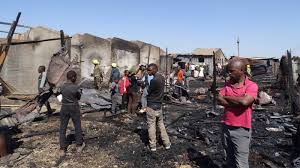
The inferno, which broke out Sunday afternoon, rapidly tore through dozens of stalls constructed from highly flammable materials within the densely packed complex. Desperate vendors watched helplessly as their livelihoods were consumed by flames for the second time in less than a month.
“It’s gone, everything is gone… again,” wept Sarah Moyo, a clothing vendor whose stall was destroyed in the July fire and who had just restocked in a different section.
“We hadn’t even recovered from the last fire. How are we supposed to feed our families? Where do we start now? This place is cursed.” Moyo echoed the sentiments of many traders facing catastrophic losses for the second time in rapid succession.
The cause of Sunday’s fire remains unknown and under investigation. Witnesses reported the fire spread with alarming speed due to the congested layout and combustible nature of the market structures. While the Harare City Council fire brigade managed to contain the blaze and prevent it from engulfing the entire section, officials confirmed extensive damage had already been inflicted.
This latest disaster strikes just weeks after a massive fire on July 27th destroyed hundreds of stalls. That earlier devastation prompted President Mnangagwa to invoke the Civil Protection Act on August 1st, declaring the complex a state of disaster. He described the market as “a vital economic lifeline for thousands of families” and pledged government resources for rehabilitation and reconstruction. However, Sunday’s fire starkly highlights the persistent vulnerability of the complex.
“The frequency of these fires is unacceptable and points to a deep-rooted problem with the infrastructure and safety standards at Glen View 8,” stated Harare City Mayor Jacob Mafume.
“While we responded swiftly, the fundamental issues of congestion and flammable materials remain unaddressed. A temporary fix is not enough; we need a comprehensive, fire-resistant redesign or relocation plan, implemented urgently.”
The recurrence of the inferno has intensified calls from traders and observers for immediate and long-term solutions. Many are demanding the government expedite its promised rehabilitation, insisting it must include a complete overhaul using fire-resistant materials and proper spatial planning, or seriously consider relocating the market to a safer, purpose-built site.
“The President declared this a disaster zone and promised help. We are grateful, but promises won’t rebuild our stalls or protect us from the next fire,” said John Chibaya, chairperson of a section within the complex.
“We need action now – proper firebreaks, durable building materials, accessible water points, and a real plan that stops this cycle of destruction. Our lives and businesses depend on it.”
Authorities now face mounting pressure to move beyond emergency response and deliver sustainable solutions for one of Zimbabwe’s largest and most critical informal economic hubs, now scarred by repeated tragedy.
Zim GBC News | Global News From An African Perspective©2025