

Zim GBC News Network
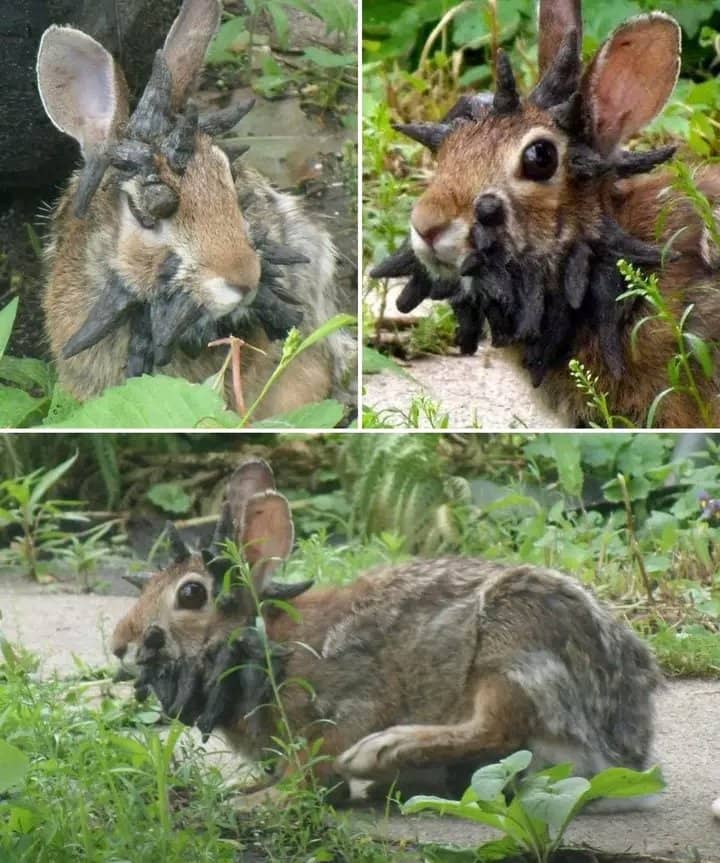
FORT COLLINS, COLORADO, USA – Residents of Fort Collins, Colorado, are reporting unsettling encounters with rabbits displaying grotesque, horn-like growths covering their faces and heads. Dubbed “zombie rabbits” or “Frankenstein bunnies” online, the shocking appearance is caused by a rare rabbit virus, officials confirm.
The eerie growths – described as resembling “black quills or black toothpicks sticking out all around his or her mouth” by resident Susan Mansfield – are the result of the Shope papillomavirus (SPV).
This virus leads to wart-like tumors, known as papillomas, primarily on the heads and faces of infected cottontail rabbits.
“I thought he would die off during the winter, but he didn’t. He came back a second year, and it grew,”
Mansfield told local news, describing a rabbit she observed over multiple seasons. Photos of affected rabbits, including one with growths nearly obscuring its entire face, have gone viral on social media platforms like Reddit and Instagram, sparking reactions ranging from horror to disbelief.
“One time I need this to be AI,” joked one social media user.
Experts Explain and Reassure Colorado
Parks and Wildlife(CPW) officials have moved to clarify the situation and alleviate public concern:
· Rabbit-Specific Virus: SPV is a relative of human papillomavirus but only infects rabbits.
· Transmission: It spreads primarily through biting insects like fleas and ticks, especially during warmer months.
· No Human or Pet Risk: Officials explicitly state SPV poses no threat to humans, dogs, cats, or other wildlife.
“This virus is not contagious to humans, pets, or other wildlife,” a CPW spokesperson emphasized.
· Rabbit Impact: While the growths look alarming, they often fall off on their own without severely harming the rabbit, unless they obstruct the eyes or mouth, impairing feeding or sight.
Avoid Contact, Observe from Afar CPW strongly advises the public:
“Officials advise residents to avoid approaching or touching affected rabbits.”
While disturbing to witness, most infected rabbits manage to survive, and human intervention is neither necessary nor recommended.
Folklore Connection?
The bizarre antler-like appearance of the growths has led some researchers and folklorists to speculate that SPV-infected rabbits might have inspired the legendary North Americanjackalope – a mythical creature depicted as a jackrabbit with antelope horns.
While the “zombie rabbit” moniker captures the shocking visual, experts stress the phenomenon is a natural, albeit rare, occurrence in rabbit populations, not a sign of supernatural horror.
Zim GBC News | Global News From An African Perspective©2025