

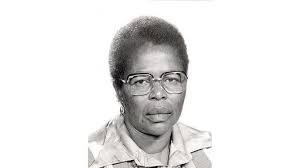
Jane Ngwenya (née Jane Lungile Dube; c. 1935 – 3 January 2021) stands as a towering figure in Zimbabwe’s liberation struggle, renowned for her fierce dedication, exceptional organizational skills in mobilizing women, and her unwavering resilience through brutal imprisonment.
Early Life and Political Awakening:
- Origins: Born Jane Lungile Dube around 1935 in the Filabusi (now Insiza) district of Matabeleland South, Southern Rhodesia.
- Education & Early Work: She trained and worked as a nurse in Bulawayo, the country’s second-largest city and a major hub of nationalist activity.
- Political Radicalization: Witnessing the injustices of colonial rule and inspired by the rising tide of African nationalism across the continent, Jane became politically active. She joined the National Democratic Party (NDP) in the early 1960s, quickly rising through the ranks.
Rise in ZAPU and Areas of Operation:
- Transition to ZAPU: When the NDP was banned in December 1961, she immediately joined its successor, the Zimbabwe African People’s Union (ZAPU), led by Joshua Nkomo.
- Bulawayo Base: Bulawayo was her primary area of operation. Here, she became a central figure in ZAPU’s structures:
Women’s League Leadership: She rapidly ascended to become the National Organizing Secretary of the ZAPU Women’s League. This was a position of immense responsibility.
Mobilization Hub: She transformed Bulawayo into a key center for organizing and mobilizing women from across Matabeleland and beyond for the nationalist cause. - National Reach: While based in Bulawayo, her role as Organizing Secretary involved frequent travel and coordination:
Salisbury (Harare): She operated in the capital, coordinating with the national ZAPU leadership and mobilizing women there.
Rural Outreach: She worked to spread ZAPU’s message and organize women in rural areas surrounding Bulawayo and further afield. - Key Operations: Her core activities involved:
Recruitment: Actively recruiting women into ZAPU.
Political Education: Educating women about the goals of the liberation struggle and their role within it.
Fundraising: Organizing events and campaigns to raise crucial funds for the party.
Moral & Material Support: Mobilizing support (food, clothing, information) for ZAPU members, families of detainees, and later, for guerrillas.
Demonstrations & Protests: Organizing and leading women in protests against the racist Rhodesian Front government and its policies.
Her Crucial Role in the Liberation War:
Jane Ngwenya’s contribution was pivotal, particularly in the early, formative, and highly repressive phase of the struggle before the armed phase fully erupted in the early 1970s:
- Mass Mobilization of Women: This was her most significant and enduring legacy. She possessed a unique charisma and organizational genius that galvanized thousands of women, turning the ZAPU Women’s League into a powerful political force. She demonstrated that women were not just auxiliaries but essential political actors and the backbone of the movement’s support structures.
- Sustaining the Party Under Repression: Following the banning of ZAPU in September 1962, the movement went underground. Ngwenya played a critical role in maintaining party structures, communication, and morale during this dangerous period of intense state surveillance and arrests.
- Leadership in Crisis: When virtually the entire top male leadership of ZAPU (including Joshua Nkomo, Jason Moyo, George Nyandoro, etc.) was arrested at various points in 1963-1964, Jane Ngwenya, alongside others like Ruth Chinamano, stepped into the leadership vacuum. She became a member of the ZAPU National Executive during this critical time, helping to keep the party functioning and defiant.
- Symbol of Defiance & Resilience: Her most famous act of defiance came with her imprisonment.
Arrest and Detention: In 1964, she was arrested by the Rhodesian authorities. Refusing to be intimidated or to renounce her political beliefs, she was subjected to severe torture and solitary confinement.
Gonakudzingwa: She was detained without trial for five years (1964-1969) at the infamous Gonakudzingwa Restriction Camp in the remote, arid southeast near the border with Mozambique. This camp was designed to break the spirit of nationalist leaders.
Unbroken Spirit: Despite the harsh conditions, isolation, and torture, Ngwenya remained politically active even in detention, organizing fellow detainees and steadfastly refusing to compromise her principles. Her resilience under extreme duress made her a legendary figure and a powerful symbol of the struggle’s determination.
- Inspiring Future Generations: Her courage and leadership, especially during her imprisonment, inspired countless other women and men to join and persist in the liberation struggle.
Later Life and Legacy:
- Release & Continued Activism: Released in 1969, she remained politically active, although she never sought high government office after independence in 1980.
- Memoir: She authored an autobiography, “The Untold Story of Jane Ngwenya: My Life in the Struggle for Zimbabwe,” providing valuable firsthand insights into this critical period, particularly the role of women and the experience of detention.
- Recognition: She is widely revered in Zimbabwe, especially within the ZAPU tradition (later PF-ZAPU and within contexts acknowledging ZAPU’s history), as a heroine of the liberation war. Her story is central to understanding the indispensable contribution of women to Zimbabwe’s independence.
- Death: Jane Ngwenya passed away on 3 January 2021 in Bulawayo.
In Summary:
Jane Ngwenya operated primarily as a political organizer and mobilizer based in Bulawayo, with significant activity in Salisbury (Harare) and surrounding rural areas. Her paramount role in the liberation war was building and leading the ZAPU Women’s League into a formidable mass movement, providing crucial support structures for the party during its most vulnerable period after the 1962 ban and the arrest of its top leadership. Her legendary five-year imprisonment at Gonakudzingwa, where she endured torture with unwavering defiance, cemented her status as an icon of resilience and commitment. She was not a military commander but a foundational pillar of the political struggle without which the armed phase could not have been sustained. Her life embodies the critical, often understated, power of women’s political mobilization in achieving Zimbabwe’s independence.
Zim GBC News | Remembering Our Unsung Heroes©2025