

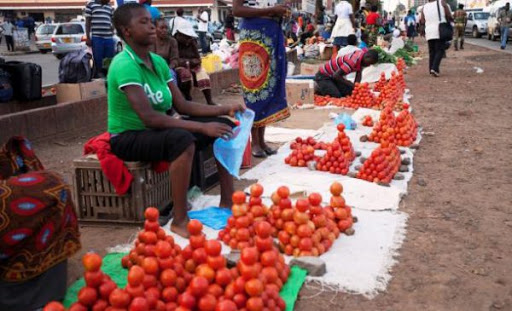
Sithembinkosi L. Jiyane/Business Reporter
Bulawayo — Bulawayo’s streets have become an eyesore for residents, with City authorities and informal traders facing blame for uncontrolled littering plaguing Zimbabwe’s once-cleanest urban center.
However, Bakani Ncube, a development practitioner and projects officer for the Bulawayo Vendors and Traders Association (BVTA), insists vendors are striving to maintain cleanliness through regular clean-up campaigns.
“We conduct awareness meetings on waste management and organize regular clean-up campaigns. Additionally, we established an enterprise specializing in waste collection, separation, and disposal,” Ncube said.
She highlighted BVTA’s initiative to install color-coded bins across the Bulawayo Central Business District (CBD) to promote waste separation.
“These bins categorize waste into paper, glass, and plastics. Distribution begins soon, with some placed downtown by month-end,” she added.
While street vendors’ economic struggles are acknowledged, environmental responsibility remains critical. A dirty City not only poses health risks but also deters tourism and harms local economies.
BVTA aims to bolster informal traders through Internal Savings and Lending Schemes (ISALS), technological integration, and partnerships with formal financial institutions.
Ncube emphasized balancing economic empowerment with environmental stewardship.
“Our strategy includes acquiring a moulding machine to recycle waste into products and installing a biogas digester for food waste,” Ncube explained.
“Informal produce traders generate significant waste, including spoilage from our Nkulumane wholesale market. Proper management is crucial.”
BVTA collaborates with the Ministry of Women’s Affairs, Bulawayo City Council, and civil society organizations on clean-up campaigns and educational outreach.
“We preach ‘Waste is money’—shifting mindsets to view waste as a resource,” Ncube revealed.
The association seeks land to expand initiatives like Dynamic Waste, a youth-led waste enterprise currently hampered by rented premises.
“We need space for recycling, greenhouses, and sewing hubs. We urge authorities to provide land and resources like skip bins and plastic waste bags for markets,” Ncube said.
She also called for consistent enforcement of bylaws, particularly targeting nighttime vendors.
“Post-5 p.m. vendors often leave litter. Adjusting bylaws to regulate night vending could create a win-win,” she argued.
Ncube identified “mushroom traders” — unaffiliated vendors operating illegally — as a major challenge.
“Authorities must allocate designated vending spaces. For many, this is their livelihood,” she stressed.
In 2023, Zimbabwe Tourism Authority (ZTA) Bulawayo Regional Manager Novuyo Mathonsi criticized council directors for lax refuse collection and unchecked informal trading.
Despite BVTA’s efforts, haphazard vending continues to exacerbate littering, underscoring the need for improved waste management and enforcement.
Zim GBC News©2025