

Business Reporter
Sthembinkosi L Jiyane
Zimbabwe’s soaring unemployment rate has made the country an economic laughingstock, with rampant inflation, corruption, repression, and cronyism driving nearly 70% of the population into abject poverty.
Financial stability seems like a distant dream for many, and those entrusted with boosting employment have instead presided over the economy’s collapse.
It’s no secret that neither government officials nor business tycoons are coming to the rescue of ordinary citizens. How often have the ruling elite flaunted their wealth while civil servants struggle to make ends meet?
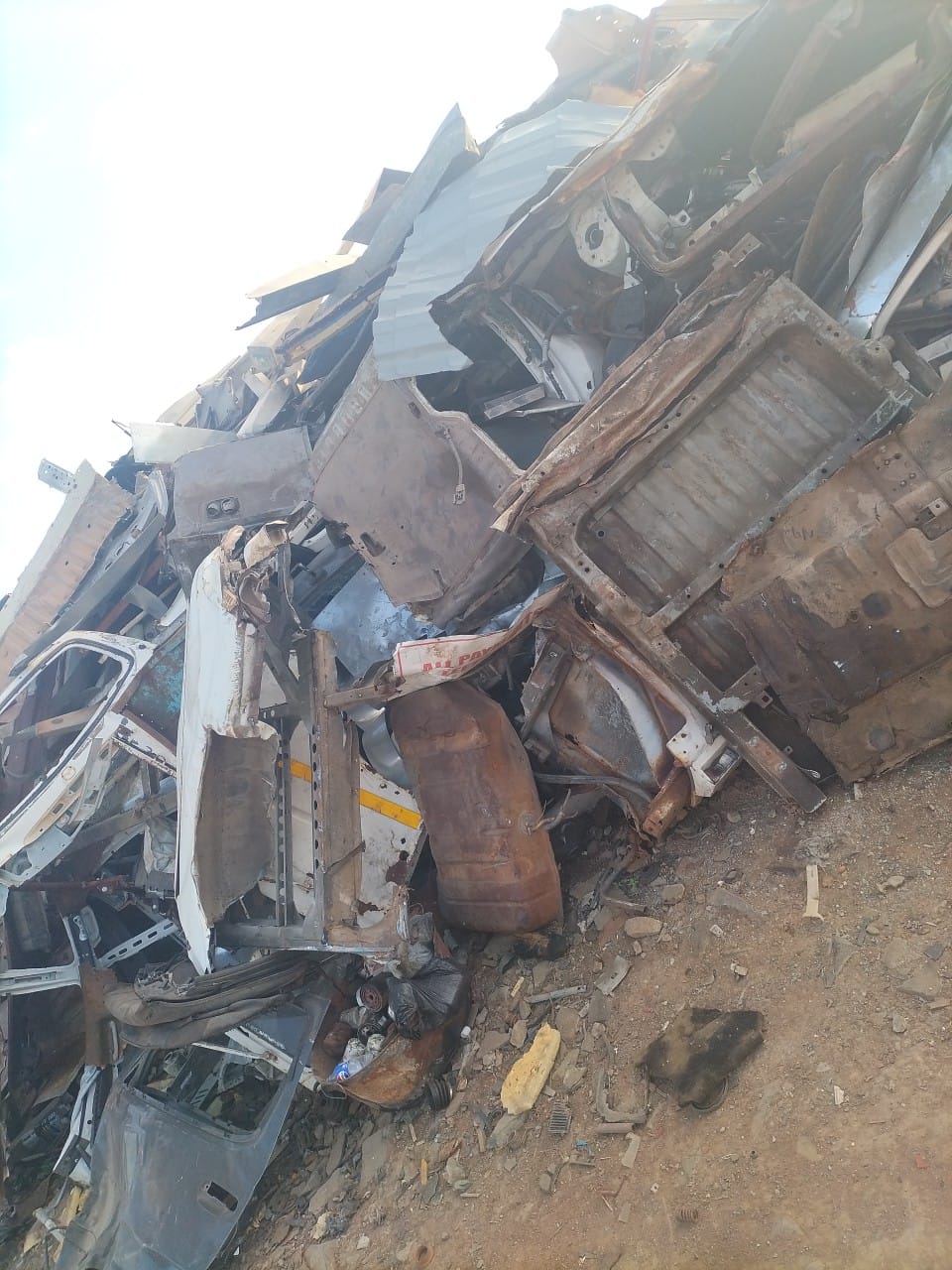
Faced with a few alternatives, many Zimbabweans have turned to trash for cash—a stark indicator of how the elite, looters, and economic saboteurs leave only scraps for the populace.
Zim GBC News took to the streets of Bulawayo to assess the situation. One man, carrying a sack of discarded tins, walked past with a weary expression that seemed to ask, How long will I continue to suffer like this? Yet, his determined stride suggested resigned acceptance.
“A friend introduced me to the business, and I quickly learned. I started by collecting scrap from my neighborhood and selling it to local buyers,” said Dumisani Moyo, who also works as a builder.
Has poverty become normalized in Zimbabwe? The answer appears to be yes. Otherwise, why would collecting and recycling scrap metal become a livelihood for so many? Some even praise these collectors as “entrepreneurial geniuses,” applauding their resilience and business acumen.
The scrap metal trade is booming, with some collectors earning up to $300 per ton, primarily supplying Chinese industries.
The so-called “Friendly Friends from the East” have dominated Zimbabwe’s scrap metal sector—along with the country’s natural resources.
Moyo explained that he transports scrap using a wheelbarrow or occasionally rents a small truck to deliver to local scrap yards located in Kelvin North. These companies buy at low prices and resell for profit to larger recycling firms, or primarily do the recycling themselves.
“I make between $20 and $30 a week,” he revealed.
Half a loaf is better than none, as the saying goes. Yet, Moyo now competes with children for scraps—minors who should be in school while their parents work. Instead, they are burdened with financial responsibilities at a young age. This crisis could be alleviated if the government redirected profits from Zimbabwe’s natural resources to stabilize the economy, improve employment rates, and ensure fair wages for civil servants.
Or does the government take pleasure in seeing children labour?
Some scrap collectors, like Nsingo, have taken measures to curb exploitation. He and his colleagues no longer buy from children or individuals without national IDs. This decision came after discovering that some were stealing scrap—either from others or from their own families—and neglecting education in favor of quick cash.
“I started scrapping in 2020 during the COVID-19 shutdown after my previous business collapsed,” Nsingo said.
“It began small but has grown steadily. I stuck with it because it’s profitable. Now, people call me to collect scrap from their homes, or they bring it directly. We accept all types of metal, weigh it, and pay based on the scale reading.”
He buys scrap cheaply, resells it, and earns a 60%-100% profit.
“I make between $1,500 and $2,000 monthly,” he said.
“This allows me to pay my workers around $200 each, cover my children’s school fees, and support my family—supplemented by my boilermaking work.”
Another collector lamented that law enforcement agents frequently harass them, demanding licenses. Yet, when they apply through official channels, their efforts are often ignored.
As more Zimbabweans turn to scrap metal for survival, it’s a glaring sign of the Mnangagwa administration’s economic failure. Restoring Zimbabwe as Southern Africa’s breadbasket seems an increasingly distant goal.
Millions of dollars are siphoned off by a privileged few, with luxury cars handed out like candy to those already wealthy. Meanwhile, job seekers are fed empty promises during election seasons—pledges of employment and fair wages that never materialize.
While scrapping contributes to waste management, the country’s leaders must urgently address the economic crisis.
Until then, trash remains one of the few viable sources of cash for desperate Zimbabweans.
Zim GBC News© 2025