

Innocent Sibonginkosi Ncube | Zim GBC News
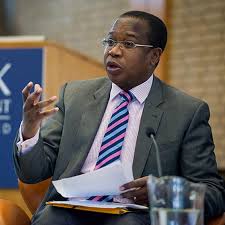
BULAWAYO – Finance Minister Professor Mthuli Ncube has sparked widespread public outrage after claiming that the average Zimbabwean spends US$9 per day, a statement that many citizens have dismissed as detached from the harsh economic realities facing the majority of the population.
The remarks were made during the 2026 Pre-Budget Seminar held in Bulawayo on Wednesday, November 5, 2025.
Minister Ncube was addressing delegates, including Members of Parliament, regarding Zimbabwe’s progress towards achieving upper middle-income status under Vision 2030 and the National Development Strategy 1 (NDS1).
DIRECT QUOTES FROM MINISTER NCUBE’S SPEECH
Regarding the US$9 per day spending threshold, Minister Ncube stated:
“Currently, on average, with the GNI per capita of US$3,300, that implies that we are spending US$9 per day.”
On what this means for Zimbabweans’ economic status, he declared:
“So if you are able to spend nine dollars per day, consistently through the year, you are already middle income. You are already middle income. You are already there.”
On the target for upper middle-income status, he added:
“The minimum GNI per capita should be US$4,500 per person, and this is an annual figure. That means that you ought to be able to spend on any given day no less than US$12 per person.”
On Zimbabwe’s economic trajectory, the Minister asserted:
“The data tells us that we are no longer a small economy, we are a serious economy going forward. By the end of December, Zimbabwe will be a fully-fledged middle-income economy.”
CONTEXT OF THE REMARKS
Minister Ncube made these comments while reporting on Zimbabwe’s economic performance under NDS1, noting that the country had achieved an average economic growth rate of 5.6 percent between 2021 and 2025, surpassing the target of 5.2 percent.
He expressed optimism that Zimbabwe was firmly on track to achieve upper middle-income status by 2030.
PUBLIC REACTION: SCEPTICISM AND MOCKERY
However, the Minister’s claims were met with immediate and fierce backlash from ordinary Zimbabweans, who took to social media and messaging platforms to express their disbelief and anger.
One citizen questioned the statistical basis of the Minister’s claim, asking:
“Stats idzi vanodzitora kupi. How many are average. How many are rich. How many are poor…”
Another respondent sarcastically dismissed the notion of an “average” Zimbabwean, quipping:
“The average Zimbabwean is obviously Chivhayo,” a reference to flamboyant businessman Wicknell Chivayo known for his lavish spending.
Others accused the government of misleading the public after years of economic hardship.
“Vanotsvinya vanhu ava. After impoverishing the people to vending they bring this,” said one angry commenter.
The mockery continued as another citizen joked:
“Kkkkk as long as Chivhayo is spending 10m per day he pools all of us up,” suggesting that the wealthy businessman’s extravagant lifestyle was skewing the national average.
One commenter questioned the Minister’s own residence, asking:
“Iye ave kugara muZimbabwe here kana kuti achiriko kuSwitzerland?” – a reference to reports that Ncube has spent significant time outside the country.
Another simply dismissed the entire speech with laughter:
“Kkkkkkk vanatsuro kumutambo wemakudo.”
OPPOSITION AND CIVIL SOCIETY REACTIONS
The Minister’s claims also drew significant criticism from opposition parties and civil society.
Assembly of Minorities leader Mudenda Chilumbo dismissed the statement as “misleading,” pointing out that most civil servants earn less than US$250 per month and that many Zimbabweans lack access to basic services such as running water and electricity.
Some lawmakers at the seminar reportedly expressed skepticism about whether the US$9 figure reflected the lived reality of most citizens. Reports noted that a US$9 per day spend for a family of five would require a monthly income of over US$1,300, which far exceeds the average civil servant’s salary.
The Minister’s speech has since become a subject of intense debate, with many Zimbabweans questioning the credibility of official economic statistics and the government’s understanding of the daily struggles faced by ordinary citizens.
· X (Twitter): @ZimGbc
· Instagram: @ZimGBCNews
· TikTok: @ZimGBCNews_01
· Facebook: Zim GBC News
· YouTube: Zim GBC News
Get real-time alerts on WhatsApp:
+263 773 820 323
For in-depth coverage, visit our website: www.zimgbcnews.co.zw
Zim GBC News | Global News From An African Perspective©2026