

Innocent Sibonginkosi Ncube | Zim GBC News
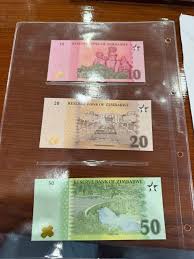
BULAWAYO – The Reserve Bank of Zimbabwe’s decision to introduce new ZiG banknotes and coins has been welcomed by the country’s retail lobby groups, who say the move will finally resolve the chronic shortage of small denominations that has forced shops to hand out coupons and sweets as change.
But in Bulawayo, a familiar cloud of doubt hangs over the launch. Many residents and informal traders are already predicting that the new currency will suffer the same fate as its predecessor — outright rejection in the city and surrounding provinces.
Retail Bodies Throw Weight Behind ZiG
Denford Mutashu, President of the Confederation of Zimbabwe Retailers (CZR), said the release of new notes and coins is expected to ease transactions for consumers who have long endured a “nightmare” change crisis.
“As business, we embrace the upgraded ZiG for seamless transacting by members of the public. We embrace the new ZiG with pride because it’s durable and is set to be accepted widely by the people,” said Mutashu.
“The ZiG coins will alleviate the change problem that has been a nightmare for consumers. Let us eradicate coupons and sweets as change.”
Zimbabwe National Chamber of Commerce (ZNCC) president Tapiwa Karoro added that a stable and credible domestic currency is a critical pillar for sustainable economic growth, price stability, and long-term national competitiveness.
“The Zimbabwe National Chamber of Commerce notes the forthcoming release of the upgraded ZiG by the Reserve Bank of Zimbabwe,” he said.
“Our message to the ZNCC membership and the broader business community is clear: the success of any national currency ultimately depends on the confidence and participation of its users, particularly the productive private sector.”
Karoro urged members to support the practical and responsible use of ZiG in commercial transactions, citing benefits including strengthened monetary sovereignty, improved liquidity circulation, and enhanced price discovery.
Bulawayo’s Ghost of Currencies Past
But on the ground in Bulawayo, the mood is markedly different. The previous local currency — often referred to simply as the “bond” — was never widely accepted in the city. Only major retailers like OK Zimbabwe and TM Pick n Pay honoured it. The ubiquitous “Messina” shops (small informal outlets) rejected it with impunity, and authorities took no action.
Now, many believe history is set to repeat itself.
“The ZiG will not be accepted in Bulawayo,” a vendor who spoke on condition of anonymity told Zim GBC News.
“These Messina shops say their cost of sales is in US dollars, so they cannot restock using local money.”
Minister Ndlovu Was ‘Utterly Surprised’
In previous interactions with Industry and Commerce Minister Mangaliso Ndlovu, Zim GBC News raised the issue of the local currency’s rejection in Bulawayo. The Minister appeared genuinely taken aback.
“This is a surprise to me,” Minister Ndlovu responded at the time. “Unfortunately, it is a matter of the Ministry of Finance, and they are the ones who are to take up the issue.”
Critics, however, note that trade and commerce falls directly under Minister Ndlovu’s portfolio.
He must act!
Kombi Drivers Speak Out: ‘Point Me to a Spares Shop That Accepts ZiG’
The rejection runs deep. Motor spares shops across Bulawayo refused to accept the previous local currency — a reality that forced commuter omnibus operators to follow suit.
“Point to me a shop that sells spares in ZiG, and I will accept it,” said a kombi driver who gave his name only as Musa.
“So why should I accept the ZiG if I will have to run around looking for someone to change this ZiG to US dollars? Baba, the government must fix its game so that we have a level business playing field.”
He added:
“Besides spares, you know we buy our fuel in US dollars. The government does not provide us with a level business playing field.”
The Fuel Question
Notably, Reserve Bank Governor John Mushayavanhu has not provided a clear answer on why fuel filling stations have not been mandated to sell fuel in the local currency at the pump. Until that changes, transport operators argue, accepting ZiG makes little commercial sense.
A Tale of Two Zimbabwe’s
What baffles many is the geographical divide. From Gweru all the way to Harare, the local currency is widely accepted. But west of Gweru, the dynamic shifts entirely.
Until the government — an unlikely prospect, according to critics — enforces the law uniformly across the country, the people of Bulawayo and surrounding regions will continue to suffer.
Vendors, who represent the lifeline of ordinary citizens wallowing in poverty, are unlikely to accept ZiG. And without their buy-in, analysts say, the new notes may never circulate where they are needed most.
For real-time alerts on WhatsApp:
+263 773 820 323
Follow Zim GBC News:
🔹 X (Twitter): @ZimGbc
🔹 Instagram: @ZimGBCNews
🔹 TikTok: @ZimGBCNews_01
🔹 Facebook: Zim GBC News
🔹 YouTube: Zim GBC News
For in-depth coverage, visit: www.zimgbcnews.co.zw
Zim GBC News | Global News From An African Perspective©️2026