
Tuesday 31 March 2026
Zim GBC News | Business Correspondent
HARARE – Zimbabweans are reeling from a double fuel price hike in March, with former Finance Minister Tendai Biti labeling the increases “speculative and punitive,” as the government simultaneously enforces a ban on individuals bringing fuel into the country from neighboring states without a license.
The Zimbabwe Energy Regulatory Authority (ZERA) first raised petrol to US$1.71 per litre and diesel to US$1.77 on 4 March. A second, sharper hike on 18 March pushed petrol to US$2.17 and diesel to US$2.05 per litre—making Zimbabwe’s fuel the most expensive in sub-Saharan Africa.
Speaking to the media in Harare, Biti, the convenor of the Constitution Defenders Forum (CDF), questioned the rationale behind the increases, pointing to existing domestic reserves.
“It’s a very difficult period in our history, in our country. The working people are suffering. There’s a barrage of attacks on the working people of Zimbabwe,” Biti said.
“The price of fuel has been increased by more than 60 per cent to $2.20 a litre, which has now become the most expensive fuel in sub-Saharan Africa. This is notwithstanding that we had over 3 million litres of fuel already stocked at Feruka and Msasa, so that the recent fuel increases are nothing but speculative, punitive measures against the people of Zimbabwe.”
Biti highlighted the irony that nations such as Zambia, whose fuel imports transit through Zimbabwean territory, now pay significantly less at the pump.
“We could and should have benefited from the buffer, the reserve buffer of fuel that we already have in the country. So the irony is that countries like Zambia, whose fuel actually passes through Zimbabwe, now have fuel that is considerably less than that of Zimbabwe,” he added.
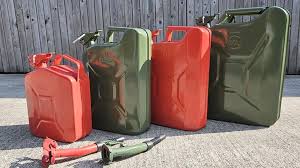
Meanwhile, the government has moved to close a long-standing avenue for relief used by motorists. Authorities are now strictly enforcing a new license requirement for anyone carrying fuel in portable containers—including jerry cans—at all ports of entry.
The Daily News reported that the strict controls, now enforced at Beitbridge and other border posts, aim to curb the parallel market and enhance safety. For years, Zimbabwean motorists have relied on cheaper fuel in South Africa, Botswana, and Namibia, often returning with multiple jerry cans. Under the new regulations, that practice is prohibited without a valid license.
The contrast in regional policy could not be starker. On 27 March, Namibia announced a 50 per cent cut in fuel levies for three months starting 1 April. Namibia’s Minister of Industries, Mines and Energy, Modestus Amutse, cited “high price volatility of petroleum products, which resulted from the ongoing geopolitical tensions in the Middle East.”
“The objective is to smooth price volatility and ensure stability in domestic fuel prices,” Amutse said.
In Zimbabwe, taxes now account for nearly 40 per cent of the petrol price. According to ZERA’s Fuel Price Build-Up dated 18 March, the tax component jumped from US$0.5209 to US$0.857 per litre in just two weeks—a 64.5 per cent increase. While the actual fuel product costs approximately US$1.18, the total tax burden now almost equals that cost.
“Pump prices are determined by international product prices, taxes and levies, and distribution margins,” ZERA stated.
In response to the crisis, Finance Minister Mthuli Ncube announced on 24 March that the government plans to increase ethanol blending from E5 to E20 to reduce costs.
“We’re talking to those who are supplying us with ethanol to increase the blending from 5% to 20% from E5 to E20, and we believe that that alone, in terms of analysis, could reduce the price by as much as US$0.18 or US$0.19 or thereabout,” Ncube said.
The Minister also confirmed that levy reductions were used to cap diesel prices.
“Already we’ve been revising taxes and levies. Last week, when the price of diesel moved up to US$2.05, it could have gone up to US$2.20, but the difference was due to the fact that we applied the levy reduction strategy on the diesel price and managed to cap it at US$2.05,” he said.
The Ministry of Information, Publicity and Broadcasting Services added that Cabinet had approved the review of time-bound fuel taxes to contain inflation and protect consumers.
Biti further criticized the government’s recent move requiring local suppliers to be paid in ZiG for goods sourced domestically, arguing that many of those products were originally purchased with foreign currency.
He also lamented what he described as a “massive clampdown on Zimbabwean citizens and the closure of all political space” following the publication of Constitutional Amendment Bill Number 3 of 2026.
“This is despite the fact that Zimbabweans have a right to freedom of expression codified in the Constitution, and have a right to freedom of assembly,” Biti said.
Follow Zim GBC News for real-time updates:
X (Twitter): @ZimGbc
Instagram: @ZimGBCNews
TikTok: @ZimGBCNews_01
Facebook: Zim GBC News
YouTube: Zim GBC News
Get real-time alerts on WhatsApp:
+263 773 820 323
For in-depth coverage, visit our website:
www.zimgbcnews.co.zw
Zim GBC News | Global News From An African Perspective©2026