

Innocent Sibonginkosi Ncube | Zim GBC News
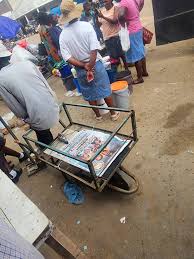
Informal transport operators in Bulawayo have devised a new survival strategy, switching from banned pushcarts to wheelbarrows and small hand-pulled trolleys to continue moving goods within the central business district, bypassing strict new regulations introduced by the local authority.
The ban, enforced under Statutory Instrument 220 of 2023, the City of Bulawayo (Clamping and Tow-away) By-laws, prohibits the use of pushcarts within the CBD area bounded by Naison Kutshwekhaya Ndlovu Avenue, Lobengula Street, Joseph Msika Avenue and Robert Mugabe Way.
Since the regulations came into effect, municipal police officers have been conducting routine patrols across the CBD, impounding pushcarts found operating within the restricted zone. The crackdown has left many operators without their primary source of income, forcing them to innovate or face destitution.
Adapt or Starve
One operator, Mthokozisi Ndlovu, told Cite Zw that the shift to a wheelbarrow was a direct response to having his pushcart seized by municipal police last month.
“They took my pushcart and I could not afford the fines to get it back. I have a family to feed so I started using a wheelbarrow because it is smaller and easier to move around without attracting too much attention from the municipal police,” Ndlovu said.
His sentiment was echoed by Thabiso Moyo, another operator who described how workers in the informal sector have been forced to adapt quickly to the new rules simply to continue earning a living.
“Pushcarts were our main tools for transporting goods for shop owners and vendors but now they are banned in the CBD. Some of us are now using small trolleys or wheelbarrows just so we can continue working, even though they carry less load,” Moyo explained.
Reduced Efficiency, Longer Hours
While the alternative equipment allows operators to evade detection, it comes at a significant cost to productivity and earnings.
Timothy Dube, a trader who now relies on a wheelbarrow, described how the change has dramatically reduced his daily income.
“With a pushcart I could move many boxes at once but with a wheelbarrow it takes several trips. It means I work longer hours but earn less money. Still, it is better than sitting at home with no income,” Dube said.
Operators report that the smaller carrying capacity of wheelbarrows and hand-pulled trolleys means they must make multiple trips to complete deliveries that would previously have been done in a single journey. The result is longer working days for diminished returns, a harsh reality in an already challenging economic environment.
The Legal Framework
Under the new by-laws, anyone found violating the regulations risks having their equipment impounded and may face fines. The regulations also stipulate that unlawfully removing wheel clamps or vehicles from secure compounds carries penalties that include fines or imprisonment.
The ban on pushcarts was introduced as part of broader efforts by the Bulawayo City Council to decongest the CBD and improve the aesthetic appeal of the city centre. However, informal operators argue that the regulations were implemented without adequate consultation or consideration of the livelihoods that depend on pushcart operations.
A Symptom of Broader Economic Pressures
The pushcart operators’ predicament reflects wider challenges facing Zimbabwe’s informal sector, which has absorbed thousands of formal sector workers displaced by years of economic turmoil. With formal employment opportunities scarce, many have turned to informal transport and vending as a means of survival.
The ingenuity displayed by operators in switching to wheelbarrows and trolleys demonstrates the resilience of Zimbabwean informal traders, but also highlights the precarious nature of their existence. Operating in a legal grey area, they remain vulnerable to enforcement actions that can wipe out their means of livelihood overnight.
For now, the wheelbarrows and trolleys continue to ply the streets of Bulawayo’s CBD, their operators constantly watching over their shoulders for municipal police.
It is a cat-and-mouse game that has become the new normal for those determined to earn an honest living by any means necessary.
Part Story By Cite Zw
For real-time alerts and updates, message us on WhatsApp:
+263 773 820 323
Follow us on social media:
· X (Twitter): @ZimGbc
· Instagram: @ZimGBCNews
· TikTok: @ZimGBCNews_01
· Facebook: Zim GBC News
· YouTube: Zim GBC News
For in-depth coverage, visit our website:
www.zimgbcnews.co.zw
Zim GBC News | Global News From An African Perspective©2026