

Sithembinkosi L Jiyane
Crimes & Court Reporter
www.zimgbcnews.co.zw
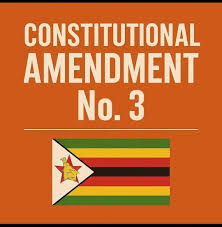
Zimbabwe’s political temperature is rising fast as Constitutional Amendment Bill No. 3 turns into the centre of a nationwide storm, drawing sharp reactions from civic groups, legal minds, and now, the youths.
What began as Cabinet’s reported approval of proposed constitutional changes has exploded into a full-scale public debate. At stake? How the President is chosen, how long leaders stay in office, and who controls key democratic institutions.
One of the boldest proposals would scrap the direct election of the President by citizens and instead hand that power to Members of Parliament. In simple terms: voters would elect MPs, and MPs would elect the President.
The Bill also proposes stretching presidential and parliamentary terms from five years to seven. Critics say that’s not just an amendment, it’s a political plot twist that could reshape Zimbabwe’s electoral calendar beyond 2028.
And that’s not all.
The number of Senators could increase from 80 to 90, with the President appointing the additional ten. Voter registration duties could shift from the Zimbabwe Electoral Commission (ZEC) to the Registrar-General’s Office. Public interviews for judges, once hailed as a transparency breakthrough, could be scrapped.
The Zimbabwe Gender Commission could be dissolved, with its functions folded into the Zimbabwe Human Rights Commission.
Traditional leaders could also be allowed to openly participate in politics, breaking with the long-standing constitutional bar on partisan involvement.
As the proposals stack up, so does the pressure.
Civic organisations like the Defend the Constitution Platform (DCP) and the Constitution Defence Forum (CDF) have stepped into the ring, warning that the amendments threaten constitutional democracy and urging citizens to remain vigilant.
But the loudest entrance may have come from an unexpected corner, the youths.
A group calling itself The Citizens Youths of Zimbabwe has unleashed a dramatic list of 50 direct questions aimed squarely at President Emmerson Mnangagwa and Justice Minister Ziyambi Ziyambi.
Their tone? Bold.
Their message? Answer us.
“Why did you do this to our Constitution?”
“Who benefits?”
“Did you consult the people?”
“Why extend presidential term limits?”
“How will you ensure free and fair elections?”
From corruption and unemployment to youth empowerment, poverty, education, media freedom, land reform and the economy, no topic was left untouched.
In a statement penned by Cmde Calvin Tinarwo, the youths declared that their questions are not an attack, but a civic duty.
“The Constitution belongs to the people. Any change to it must reflect the will of the people”, the statement reads.
Political analysts say the unfolding drama signals more than just disagreement over legal clauses, it reflects a deeper battle over power, participation, and the future direction of the country.
As Bill No. 3 moves through Parliament, Zimbabwe finds itself at a crossroads: a nation debating not just amendments, but identity, not just law, but legacy.
One thing is certain, the Constitution conversation is no longer confined to boardrooms and parliamentary corridors.
It’s now in the streets, on radio waves, in WhatsApp groups, and in the voices of young Zimbabweans asking one powerful question:
Who owns the Constitution?
Constitutional Amendment Bill No. 3 has thrown Zimbabwe into a storm of controversy, igniting fierce debates and sparking youth-led demands for transparency and accountability.
With changes threatening to reshape presidential powers, elections, and governance, the nation is gripped by a high-stakes struggle over who truly holds the Constitution, and who decides the country’s future.
Stay Connected with Zim GBC News:
· X (Twitter): @ZimGbc
· Instagram: @ZimGBCNews
· TikTok: @ZimGBCNews_01
· Facebook: Zim GBC News
· YouTube: Zim GBC News
Get real-time alerts on WhatsApp:
+263 773 820 323
For in-depth coverage, visit our website: www.zimgbcnews.co.zw
Zim GBC News | Global News From An African Perspective©2026