

Zim GBC News | Business Correspondent
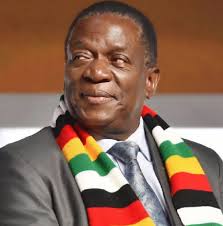
HARARE – President Emmerson Mnangagwa has revealed that the contribution of State-Owned Enterprises (SOEs) to Zimbabwe’s Gross Domestic Product has plummeted from 40% to below 20% over the past three decades, describing the trend as a significant decline for entities once considered the economy’s “locomotive.”
In a foreword to the newly released and independently audited financial statements of the Mutapa Investment Fund (MIF), the President outlined a sobering assessment of SOE performance and the government’s strategic response.
“Over the past four decades, SOEs have been central to Zimbabwe’s economic development,” President Mnangagwa stated.
“Up until the 1990s, they contributed significantly to the country’s GDP, contributing immensely to employment creation and infrastructure delivery. However, over time SOEs’ contribution to GDP dropped from 40% in the 1990’s to below 20% as at 2024.”
The President attributed the decline to global economic shifts, competitive markets, and governance challenges, underscoring the urgent need for a modernised and commercially driven approach to managing national assets.
He positioned the establishment of the Mutapa Investment Fund in September 2023 as the government’s “bold and strategic initiative” to reverse this trend. The Fund consolidates major state assets under a sovereign wealth fund model.
“The rationale for MIF is clear,” Mnangagwa explained.
“For too long, fragmented ownership across multiple ministries created inefficiencies, delayed reforms, and weakened accountability.”
The President pointed to international models such as Singapore’s Temasek Holdings and Malaysia’s Khazanah Nasional as benchmarks for the new fund.
“Successful models… have shown how disciplined governance, operational independence, and professional investment management can unlock value, attract investment, and accelerate economic transformation,” he said.
According to the President, MIF’s core mandate is to “manage the Government’s portfolio of commercial companies and to provide financial and strategic oversight to the portfolio to maximise value for the long-term benefit of Zimbabwe’s current and future generations.”
He emphasised that the reform is critical to achieving Vision 2030, the national goal of transforming Zimbabwe into an upper-middle-income economy by the end of the decade. The Fund is designed to minimise bureaucracy and political interference while ending the reliance of state companies on the national fiscus.
“Through restructuring value chains, promoting export development, driving import substitution, and fostering industrial competitiveness, the Fund will catalyse GDP growth and position Zimbabwe as a competitive player in regional and global markets,” Mnangagwa concluded.
FOLLOW US FOR REAL-TIME UPDATES:
· X (Twitter): @ZimGbc
· Instagram: @ZimGBCNews
· TikTok: @ZimGBCNews_01
· Facebook: Zim GBC News
· YouTube: Zim GBC News
Get real-time alerts on WhatsApp:
+263 773 820 323
Zim GBC News | Global News From An African Perspective©️2026